This study looks at how a rough footwear napkin sketch can be developed into a more complete product concept, then expanded into a broader brand and campaign direction using traditional design thinking and AI-assisted visualization. The process begins with a hand-drawn idea: a slip-on runner with a sock-like upper, elastic support straps, and a sculpted performance midsole. Vizcom was used to translate that sketch into rendered footwear concepts, helping evaluate form, proportion, materials, color, and construction details quickly. From there, Weavy was used to extend the product idea into a larger visual system, organizing references, testing lifestyle photography, exploring branding direction, and using higher-fidelity image models to push the concept toward a more polished campaign-ready presentation..
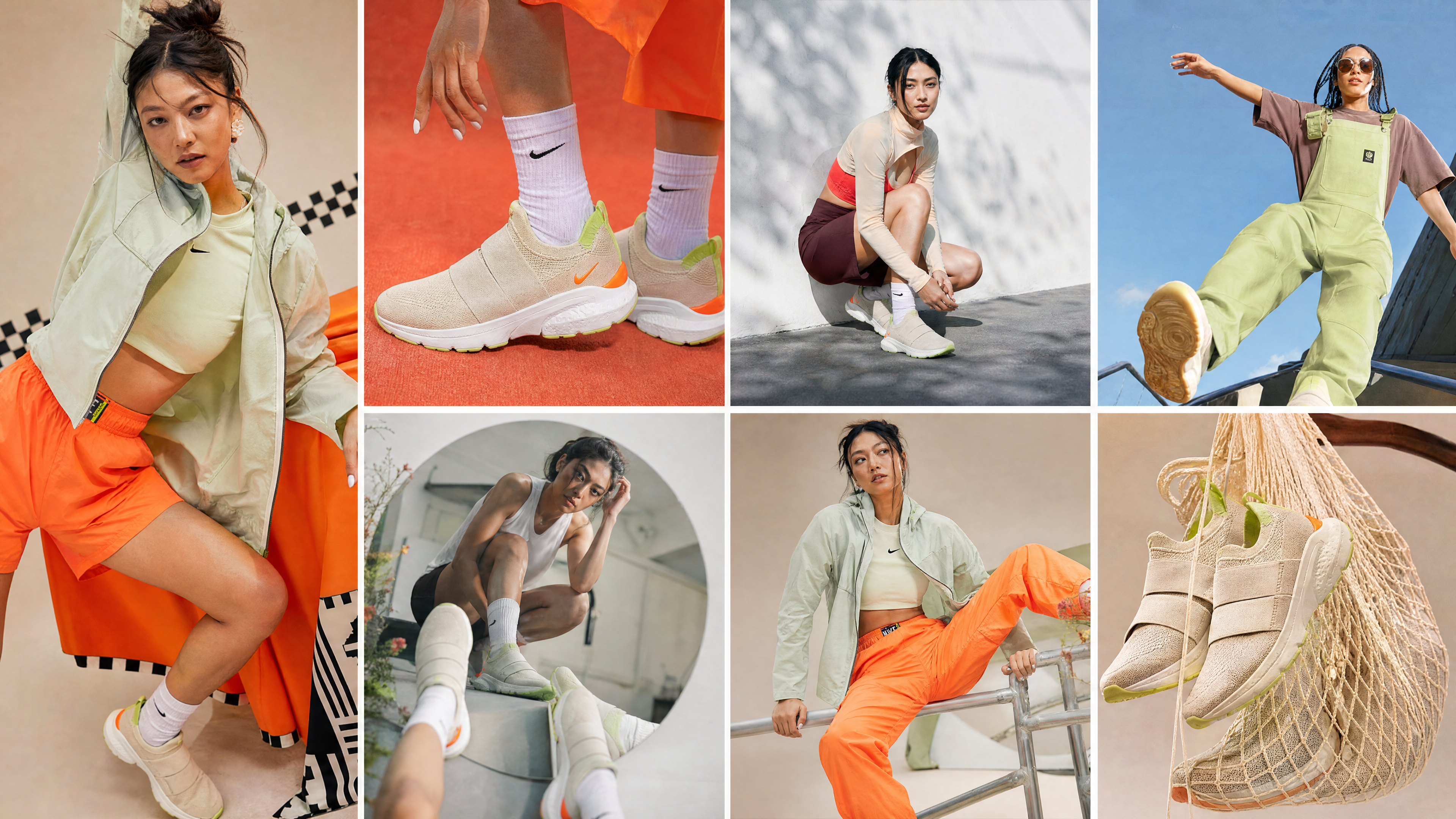
Lifestyle Photography/Marketing Campaign Imagery:
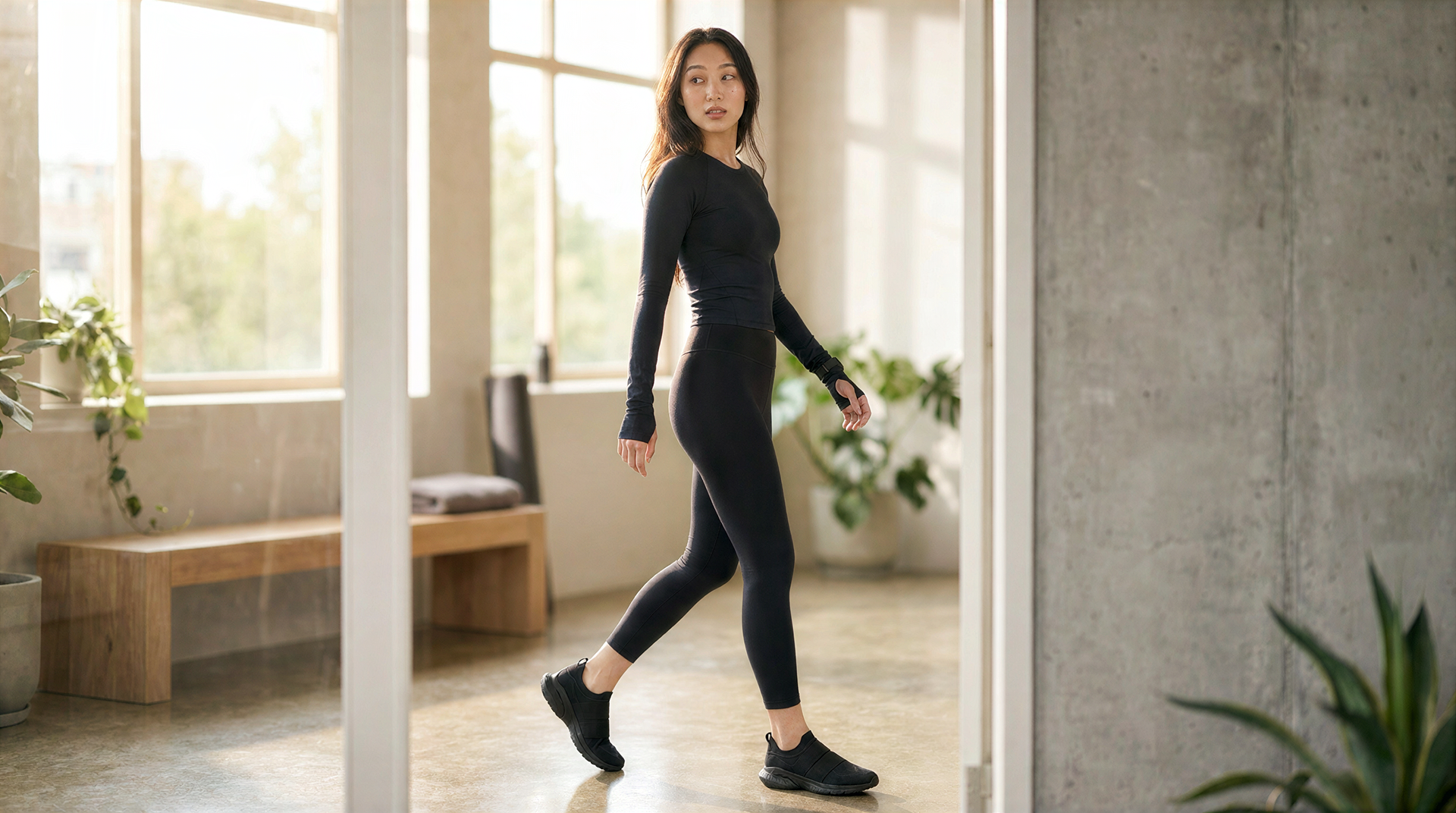
This section explores how the same product concept can shift across different lifestyle and market languages.
This section explores how the same product concept can shift across different lifestyle and market languages.
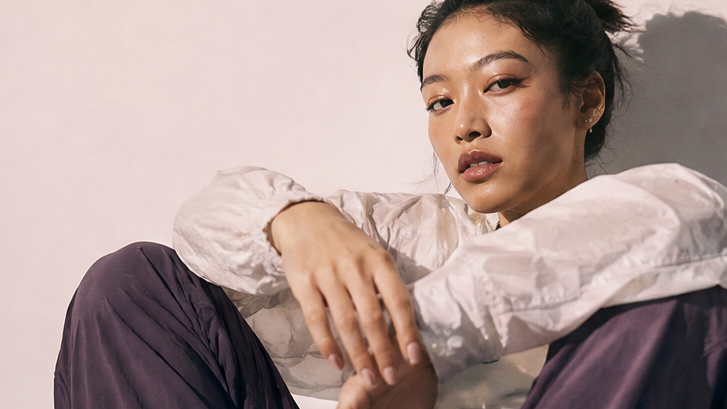
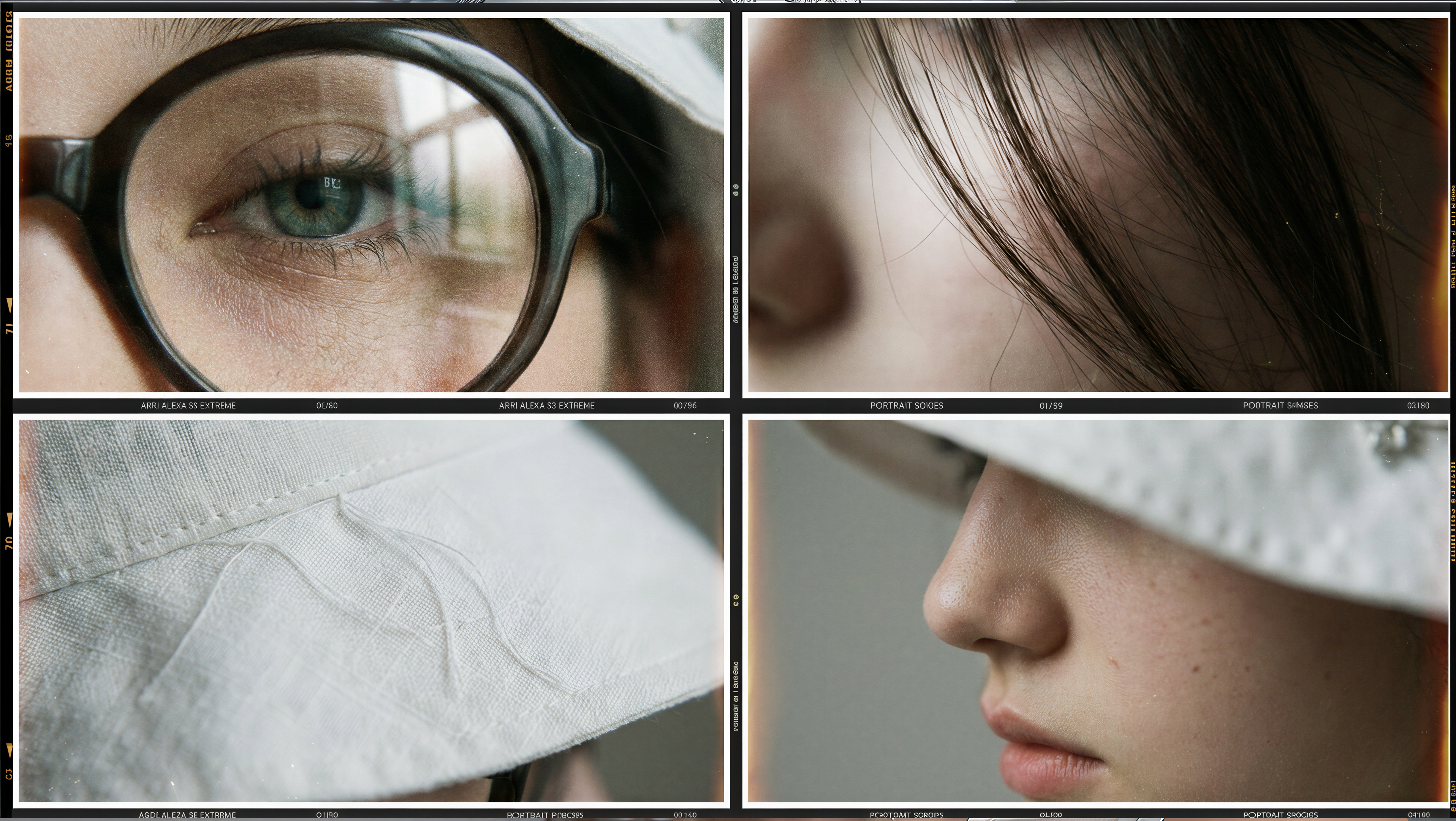
One direction leans into a softer, more international wellness tone: natural light, calm interiors, warm neutral styling, and a sense of movement tied to recovery, balance, and everyday fitness. The product feels integrated into a slower lifestyle rhythm, where comfort and ease become the main story.
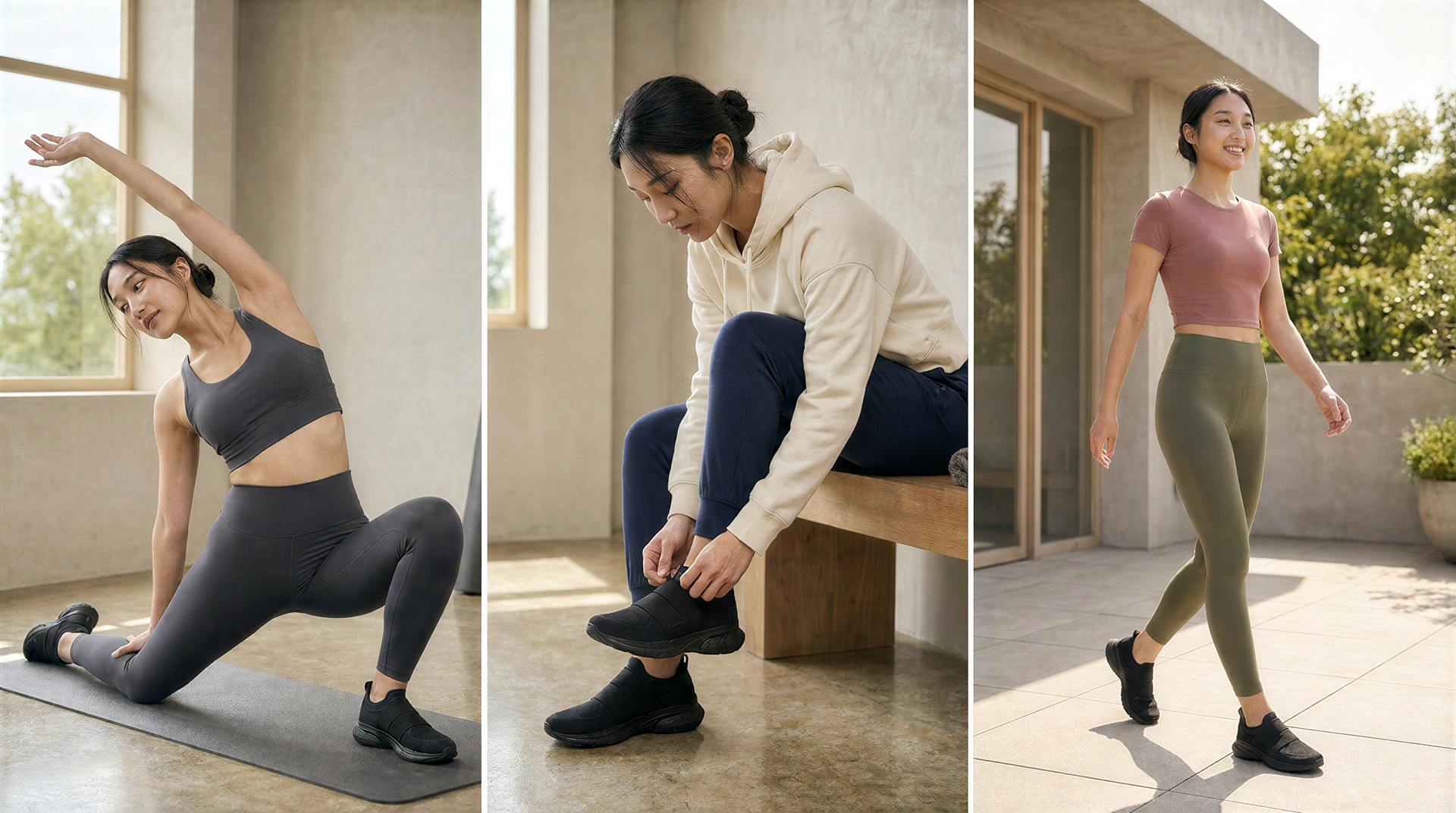
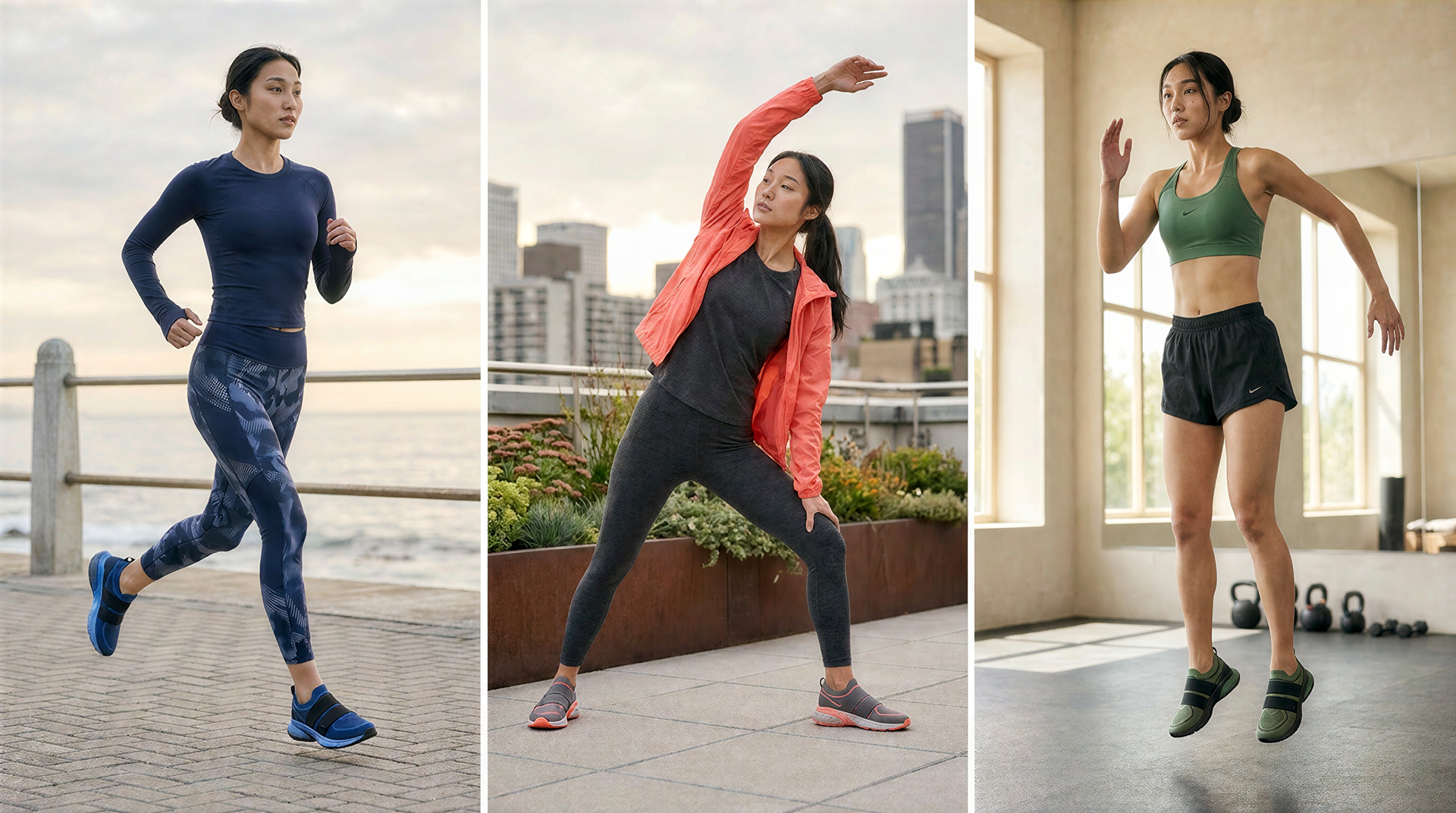
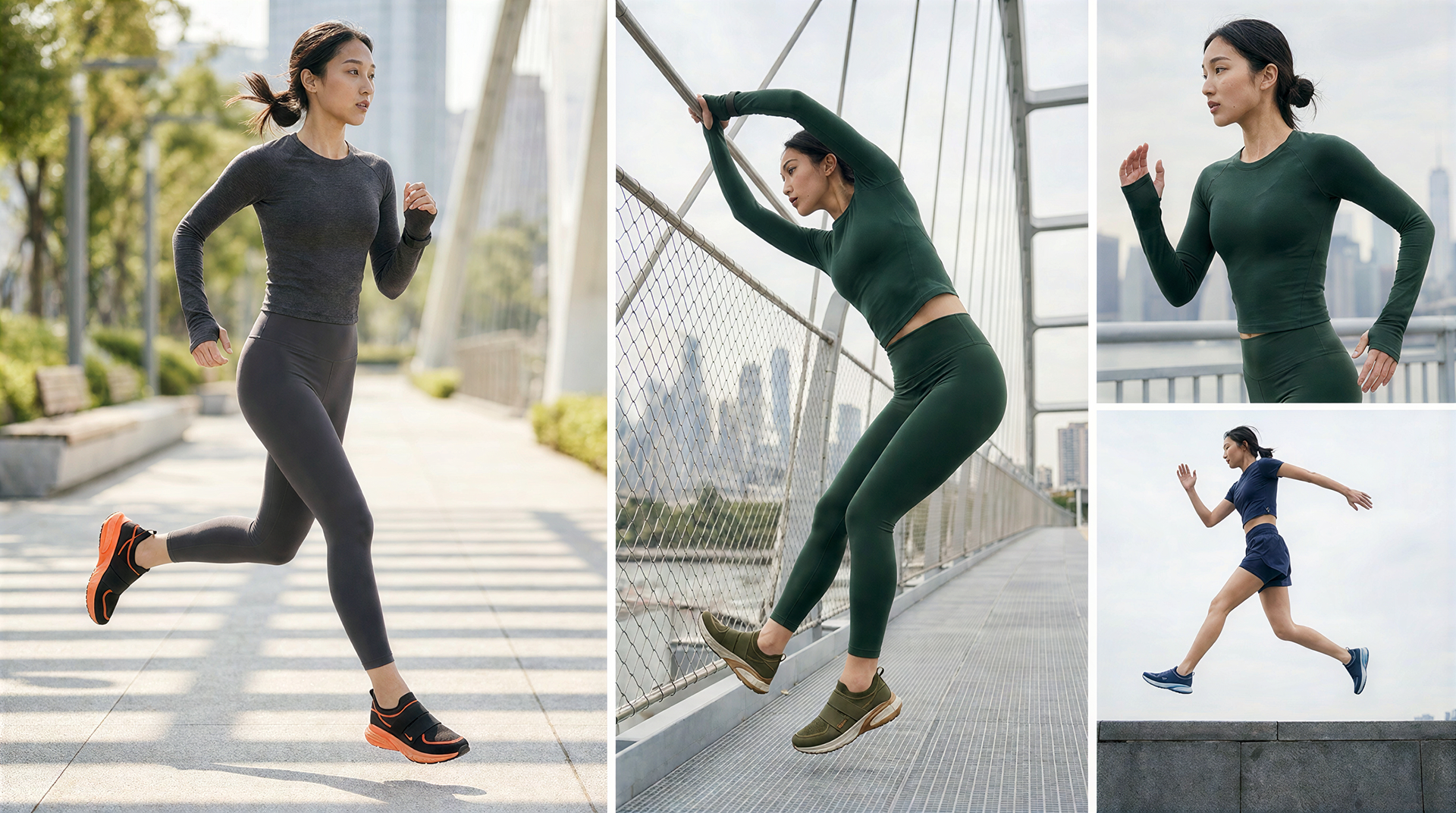
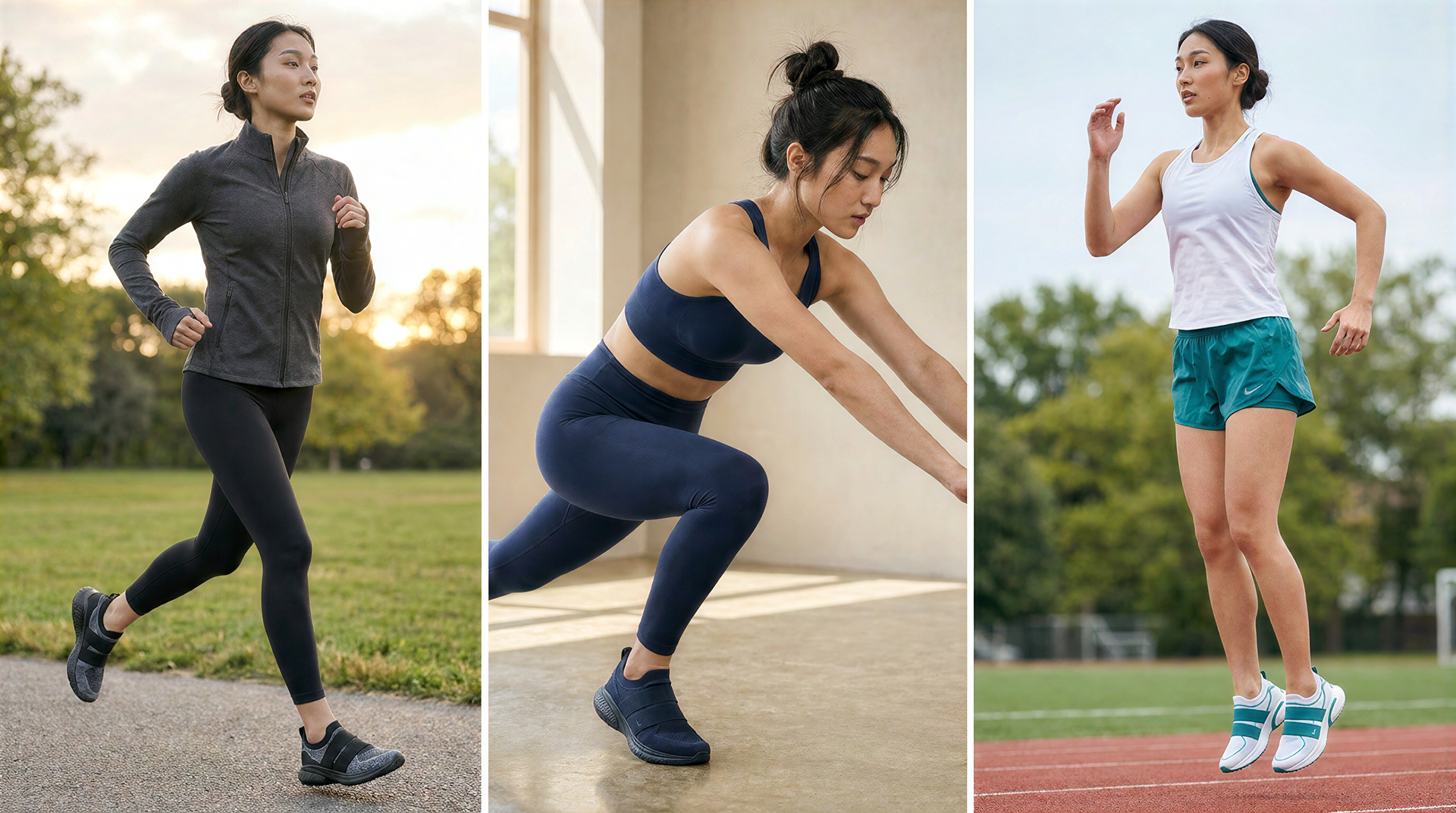

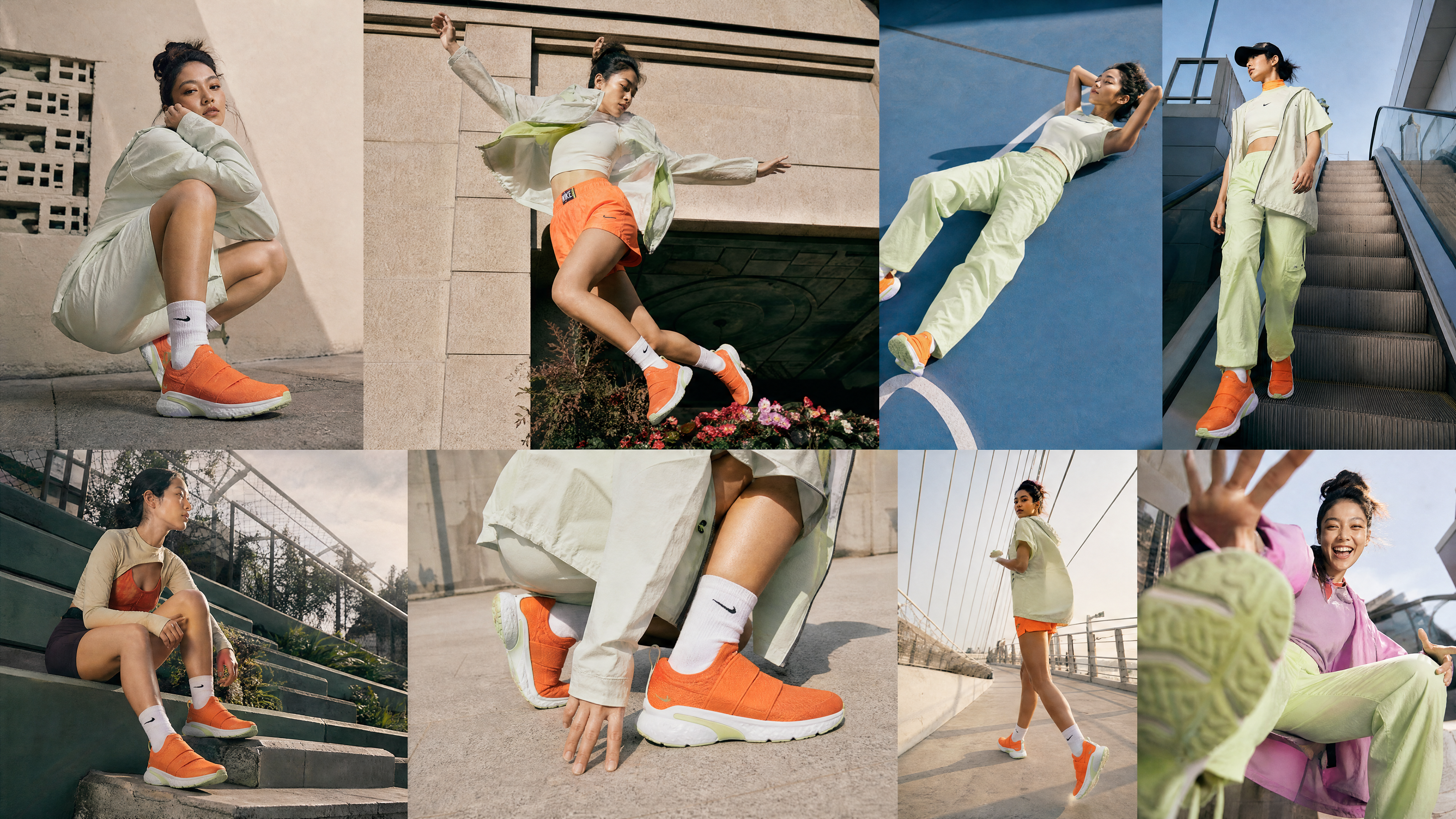
The second direction pushes the campaign into a bolder American sportswear language: brighter color, stronger contrast, more graphic styling, urban locations, and a more energetic attitude around movement and self-expression. By using a similar demographic model across both directions, the study creates a clear comparison between two campaign strategies. The product remains consistent, but the world around it changes: one more wellness-driven and aspirational, the other more vivid, active, and culturally direct.
This is where Figma Weave becomes useful as a campaign development tool. It allows the product render, model references, styling, environment, and photography direction to be tested as a connected system. The goal is to show how AI can help visualize different market positions quickly while still relying on creative direction to decide what each campaign should feel like, who it speaks to, and how the product should live in culture.
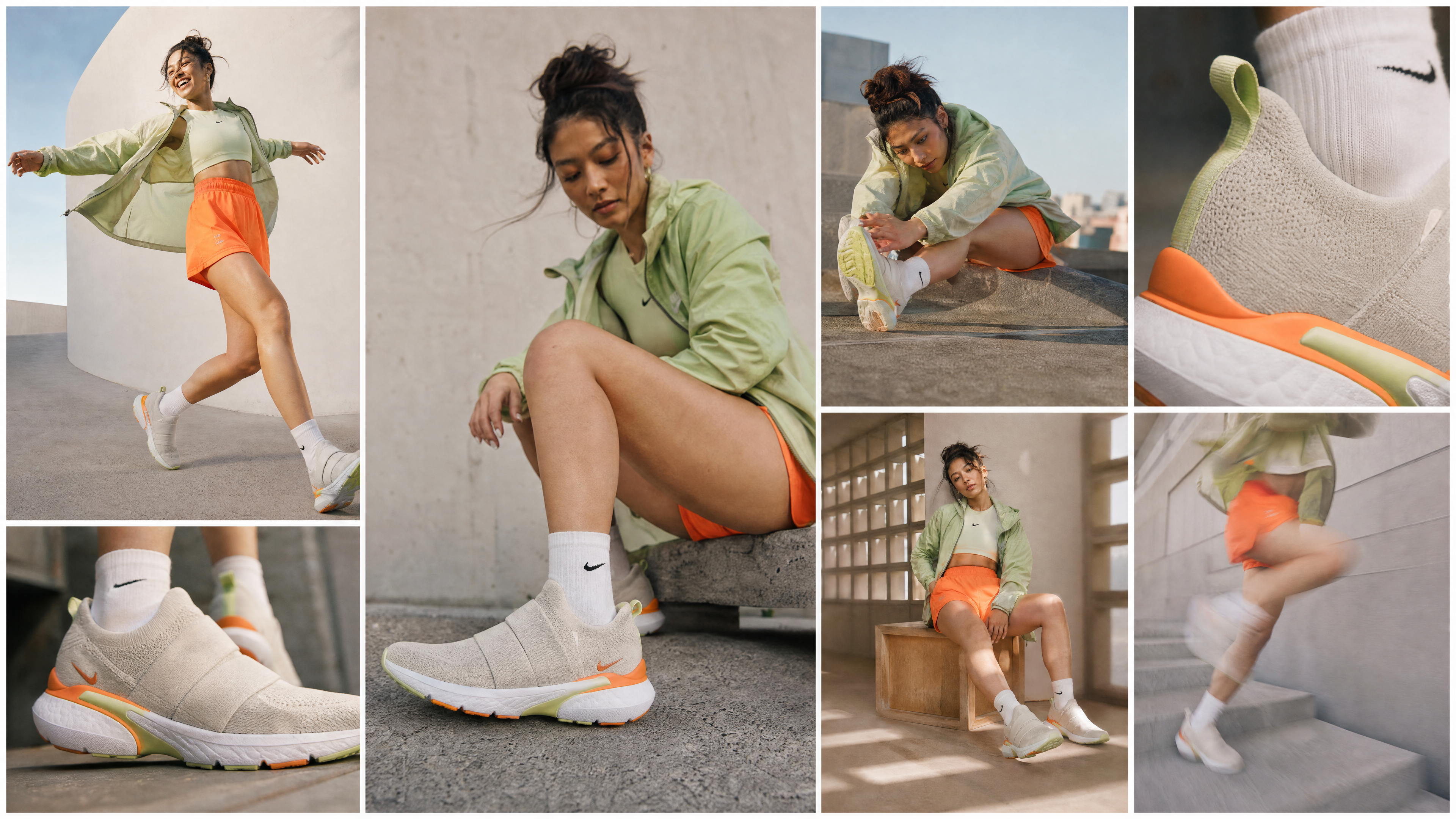
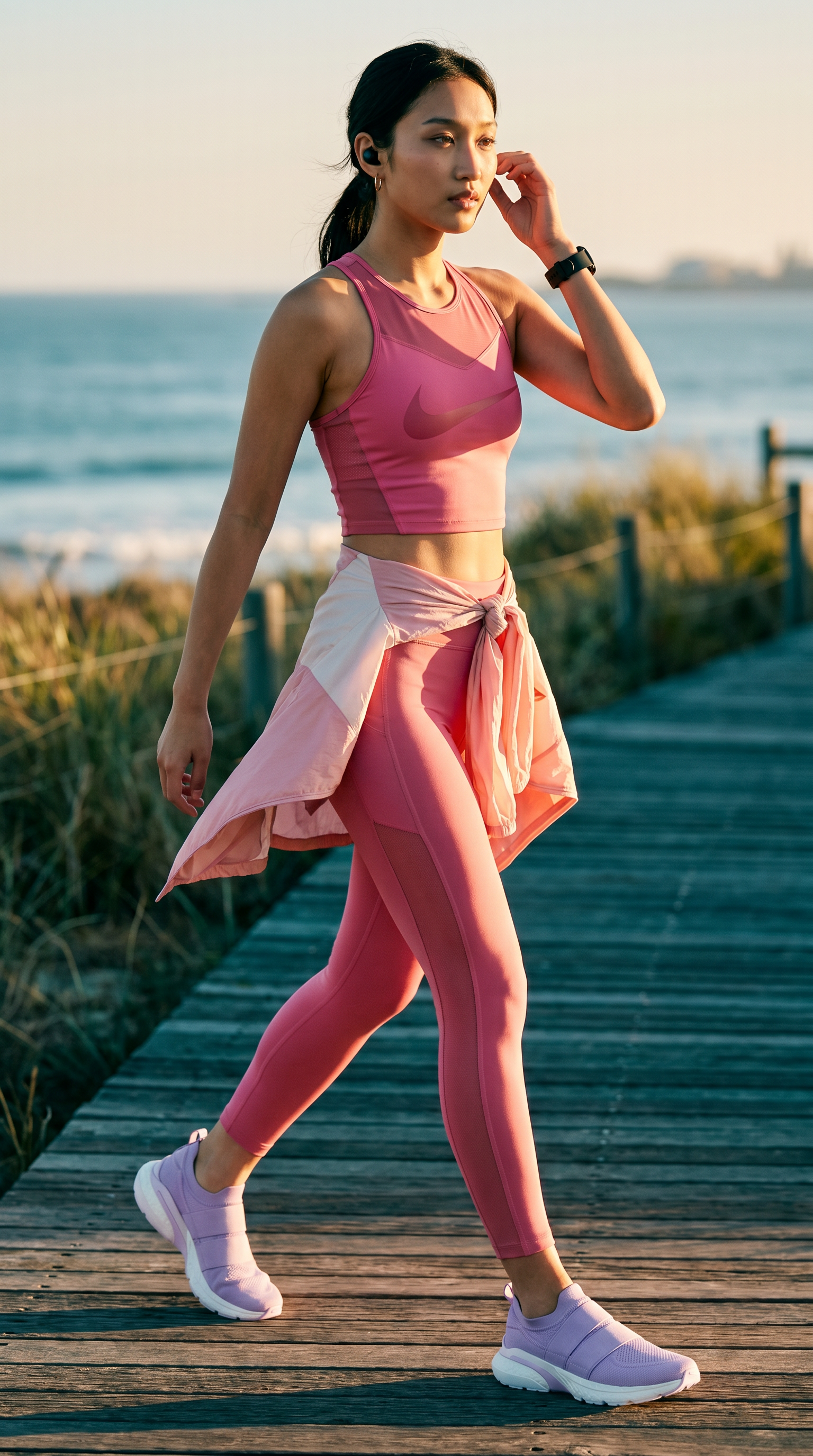
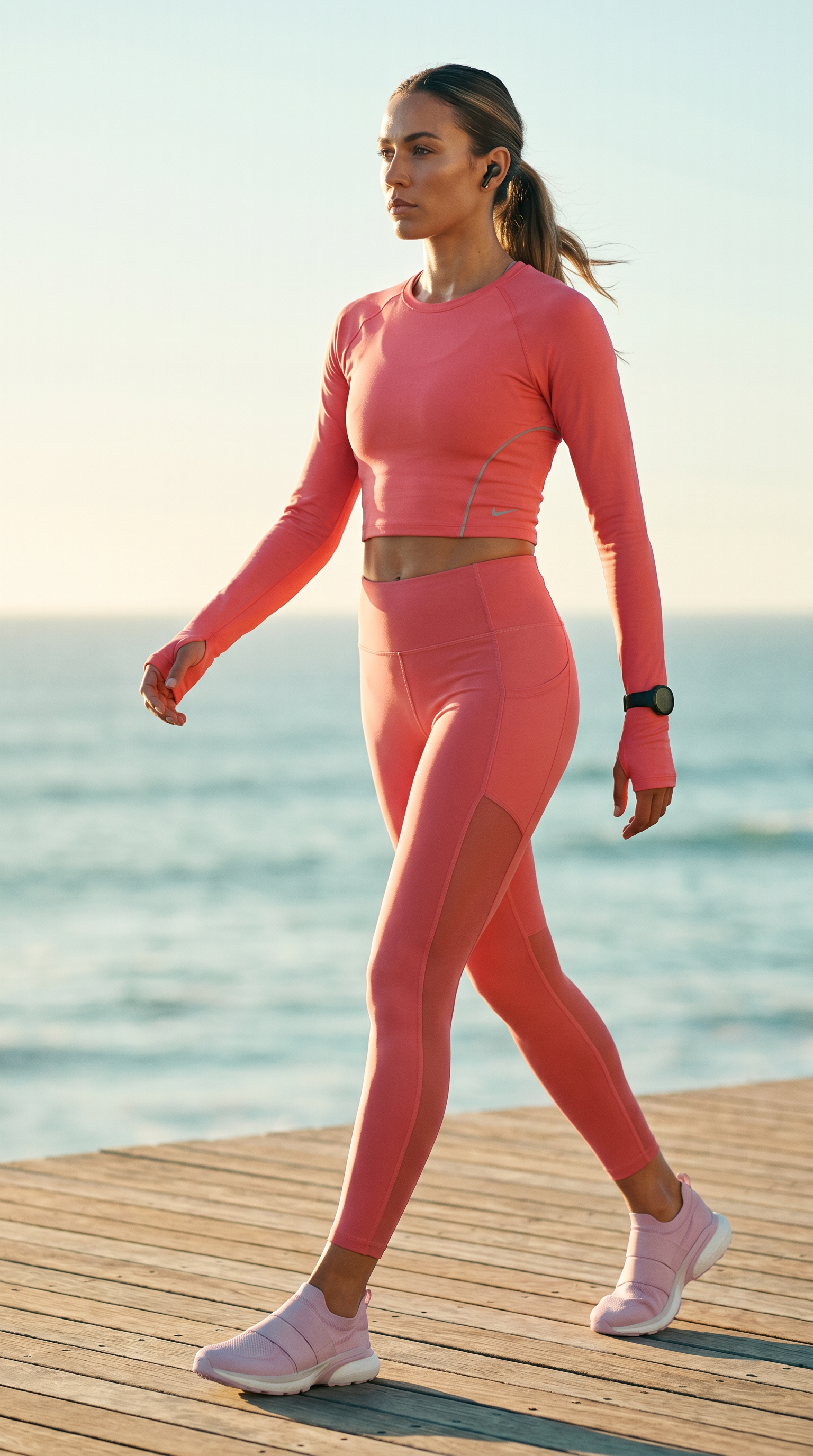
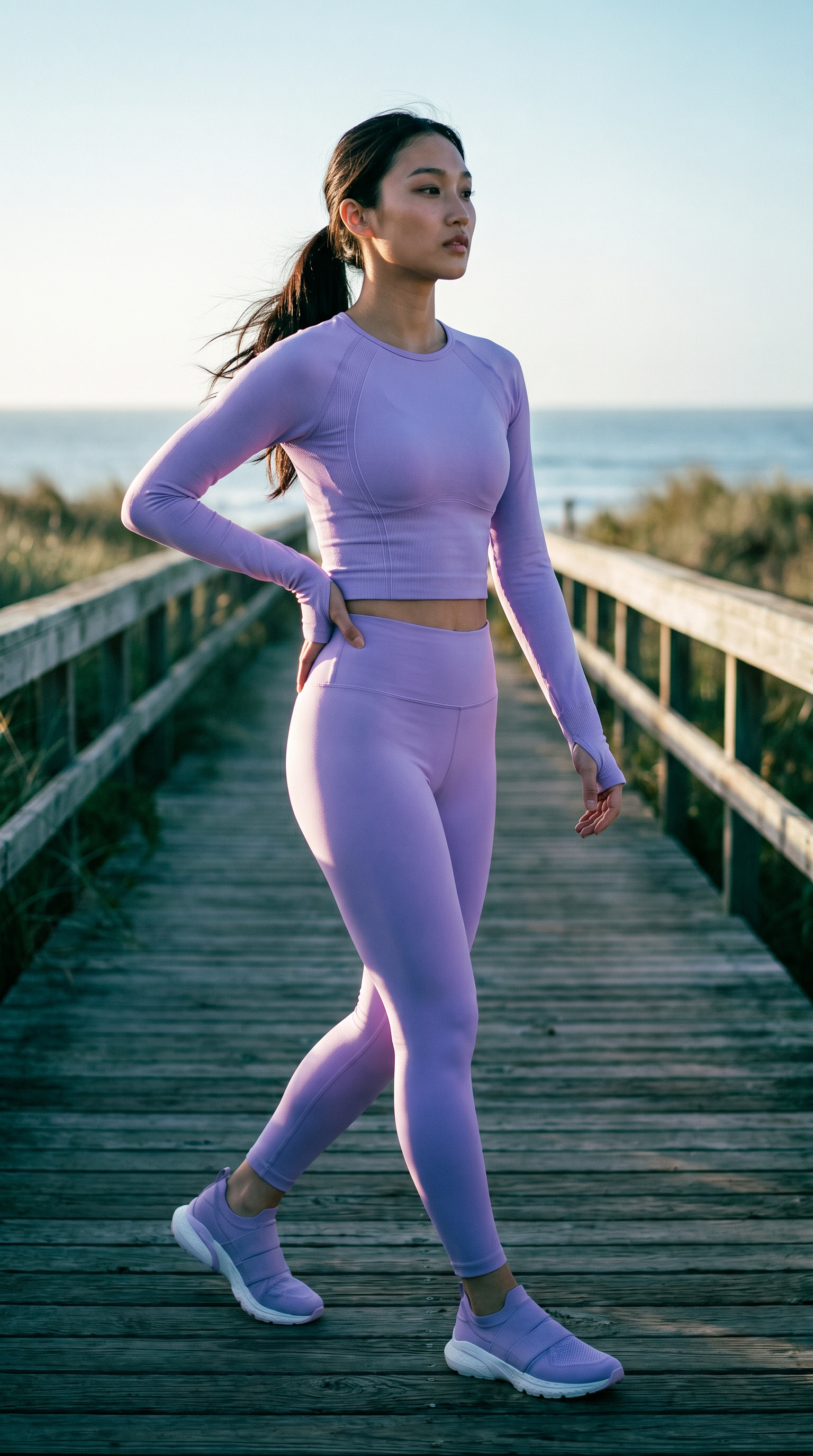
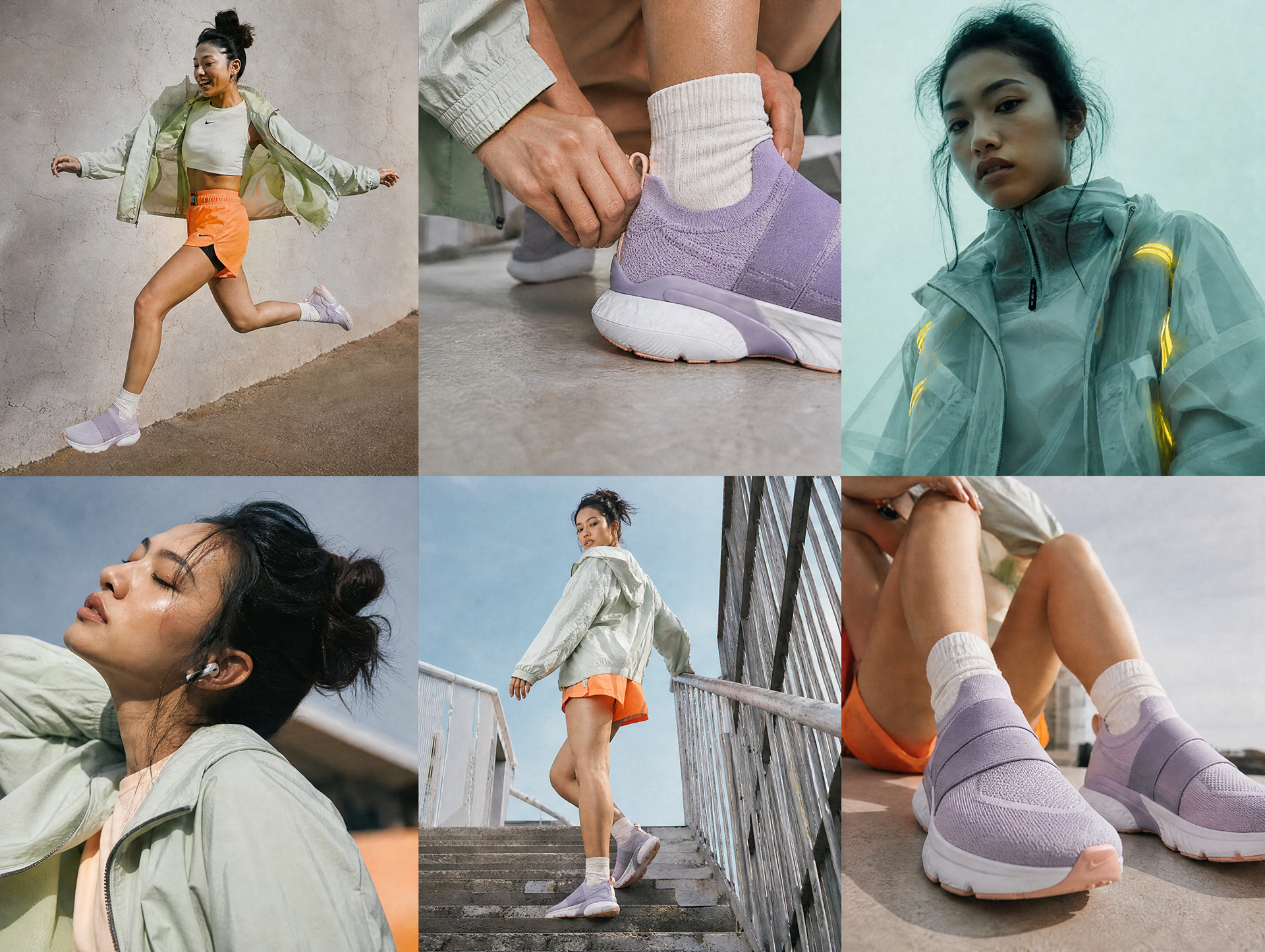
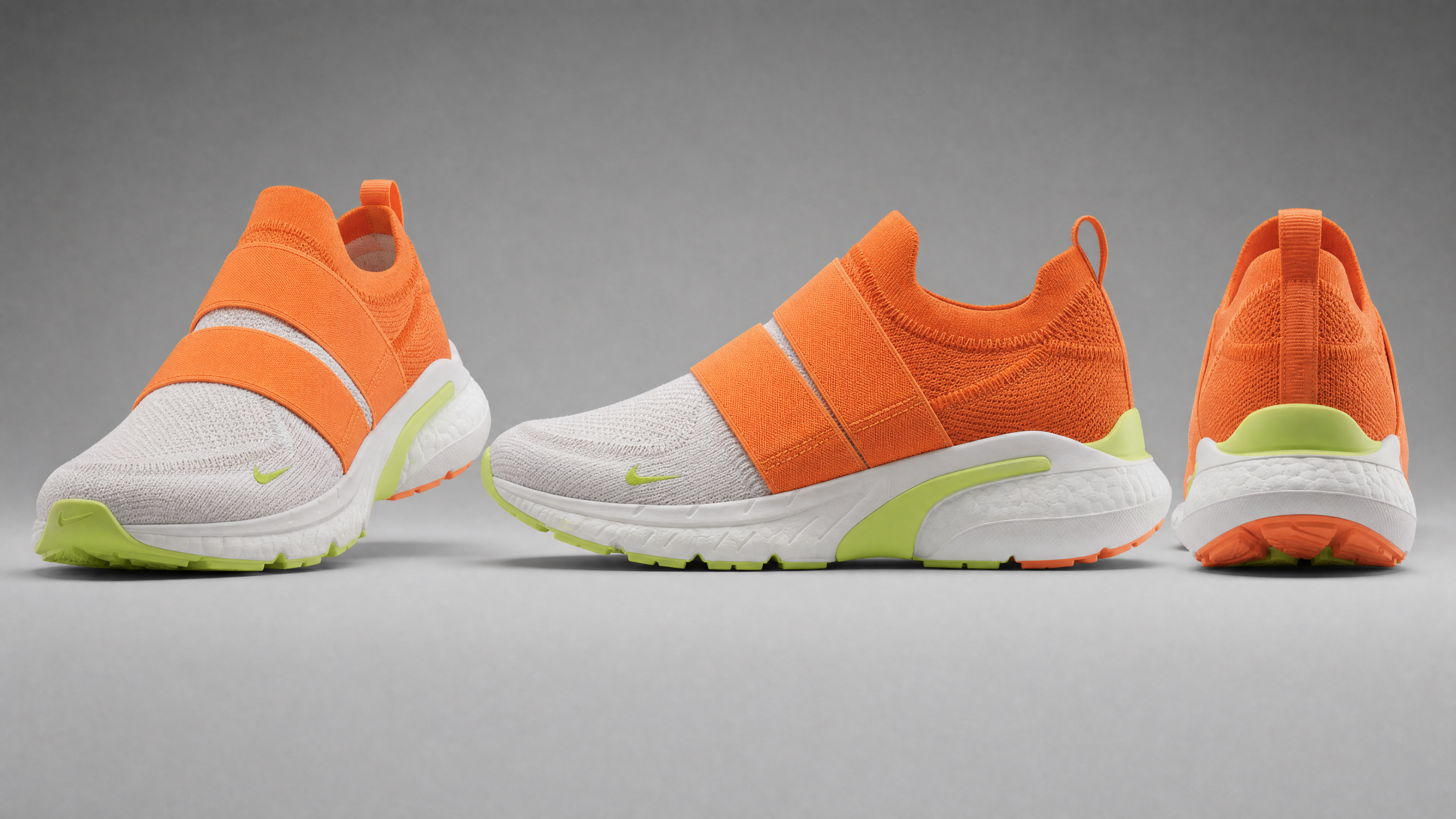
The final colorway gives the product a clean, premium foundation that can shift easily between branded campaign directions, from understated wellness imagery to more energetic performance lifestyle visuals. Its neutral material palette makes the shoe feel adaptable and brand-ready, allowing styling, environment, model direction, and photography tone to define the campaign voice around it.
Weavy / Vizcom process :
This stage connects the product design process in Vizcom with the broader campaign and branding workflow in Weavy. Vizcom was used to develop the shoe from sketch into a more refined footwear concept, translating the original drawing into form, proportion, materials, and render direction. From there, Weavy became the system for expanding the idea into a larger visual world: organizing references, building prompt logic, testing lifestyle photography, and using higher-fidelity image models such as Chat Gpt Image 2 to push the render quality, model consistency, and campaign feel. The screenshots and time-lapse material show how the work moves between traditional design thinking and AI-assisted production: sketching, directing, referencing, rendering, evaluating, and refining until the product can be seen not just as a shoe concept, but as the beginning of a full brand story.
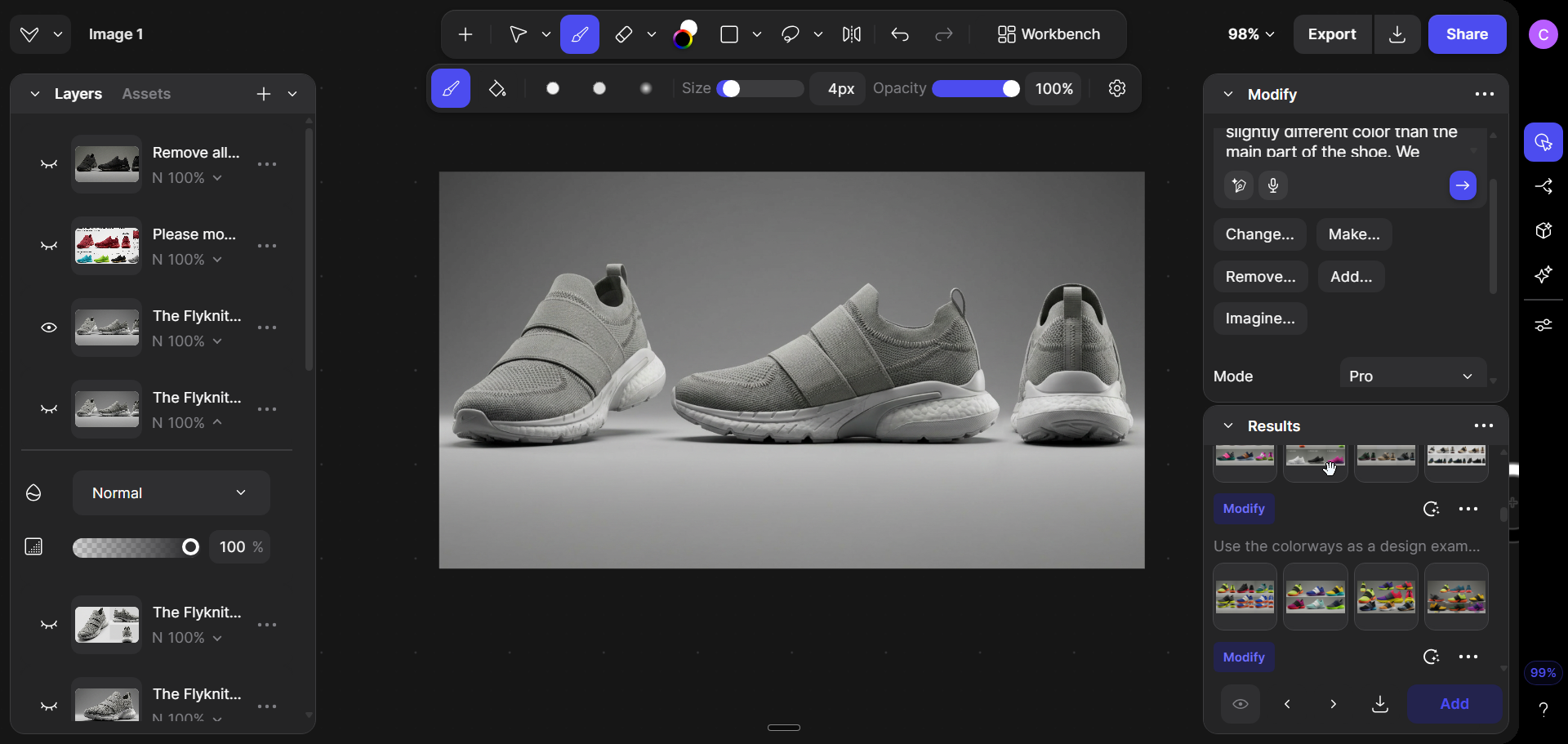
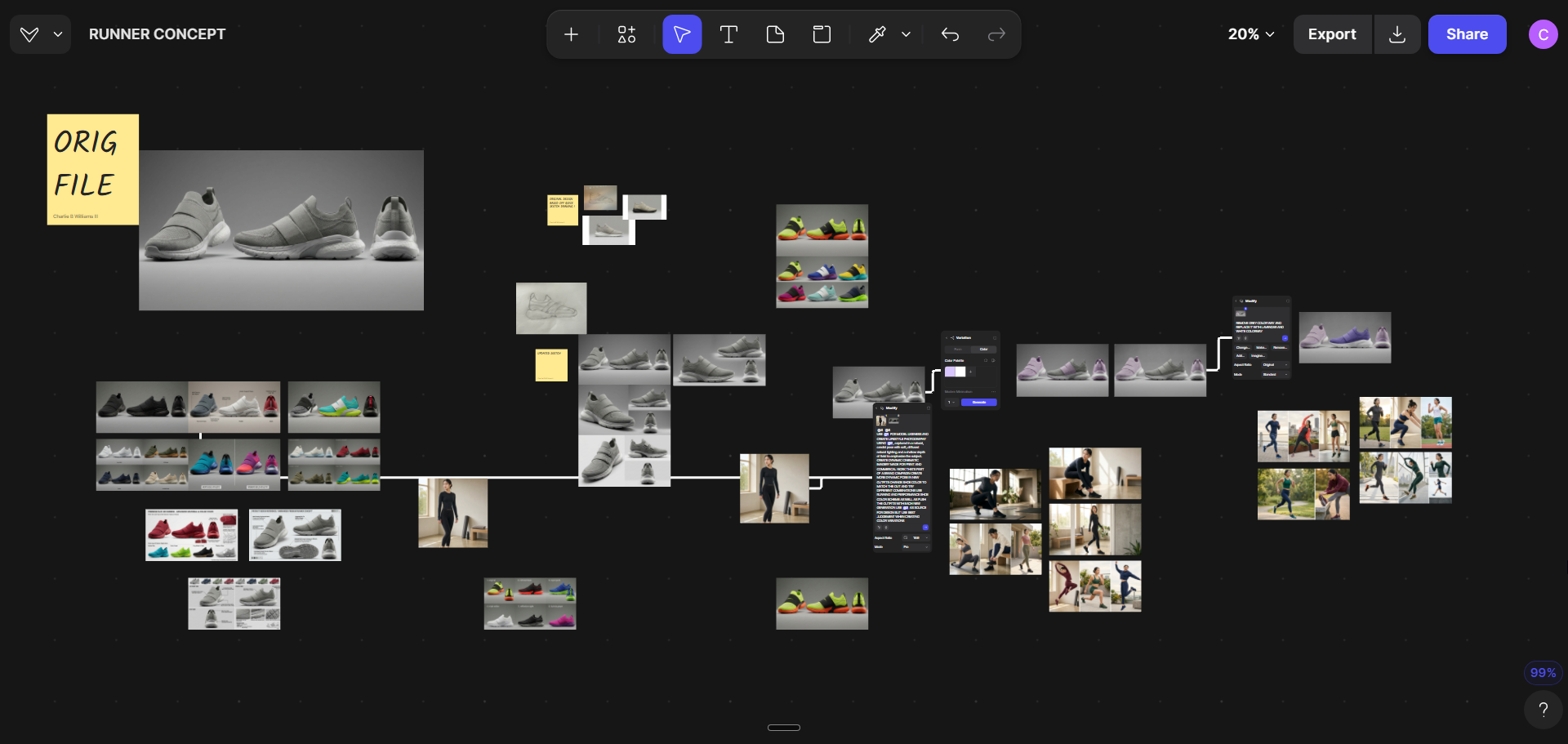
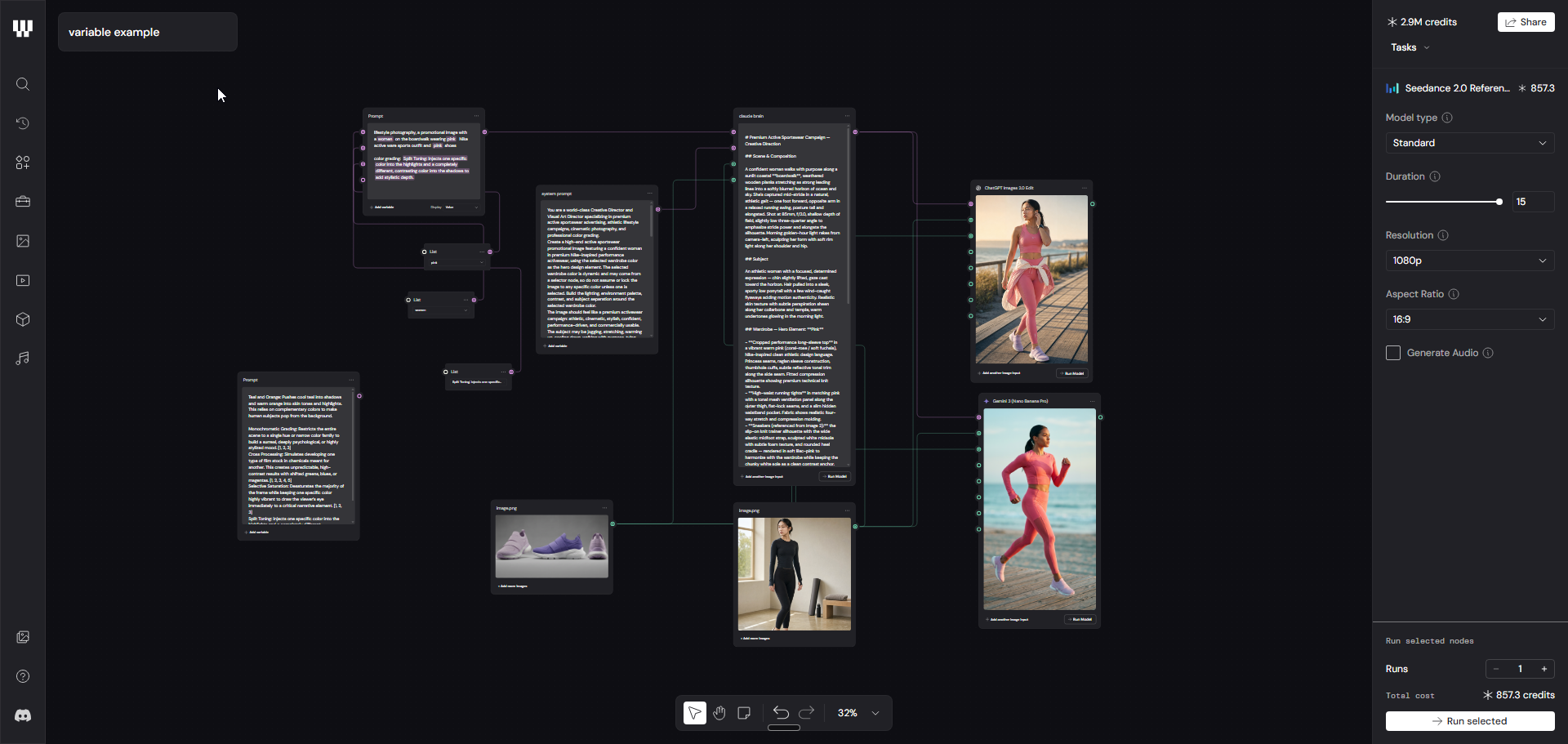
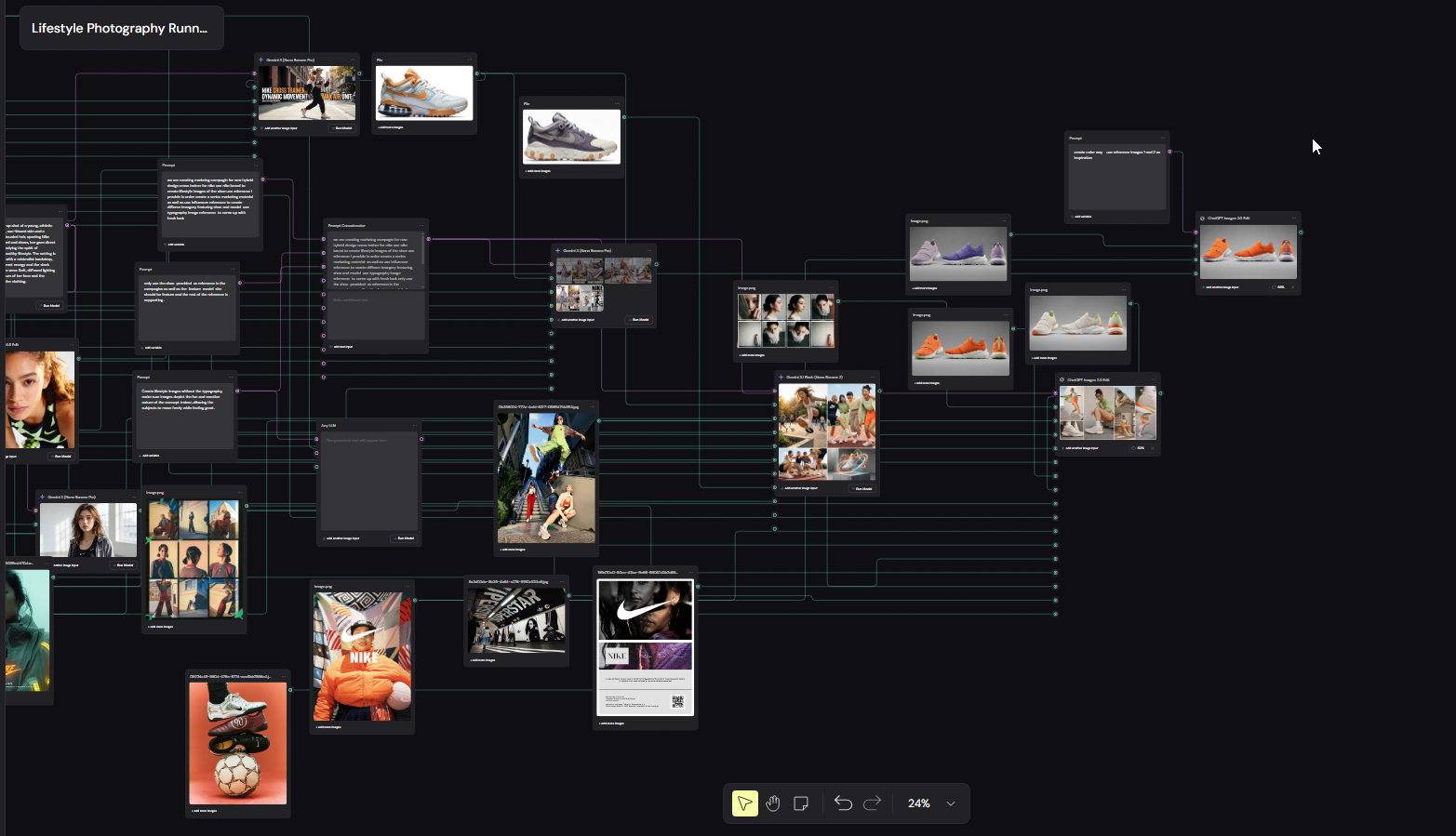
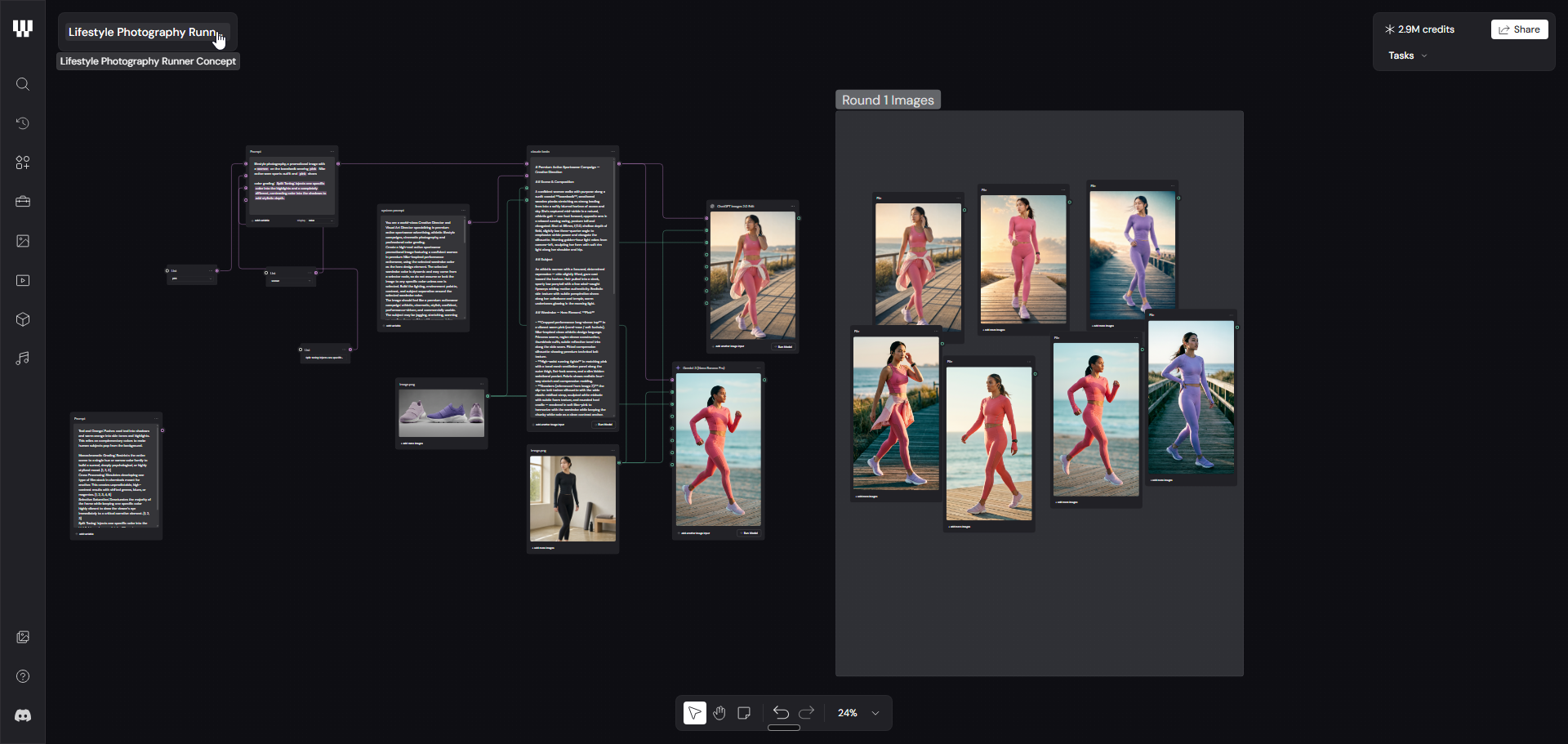
The goal is not simply to generate a shoe image. The goal is to use AI as a design development tool: a way to move faster from idea to visual proof while still relying on design judgment, product logic, and creative direction
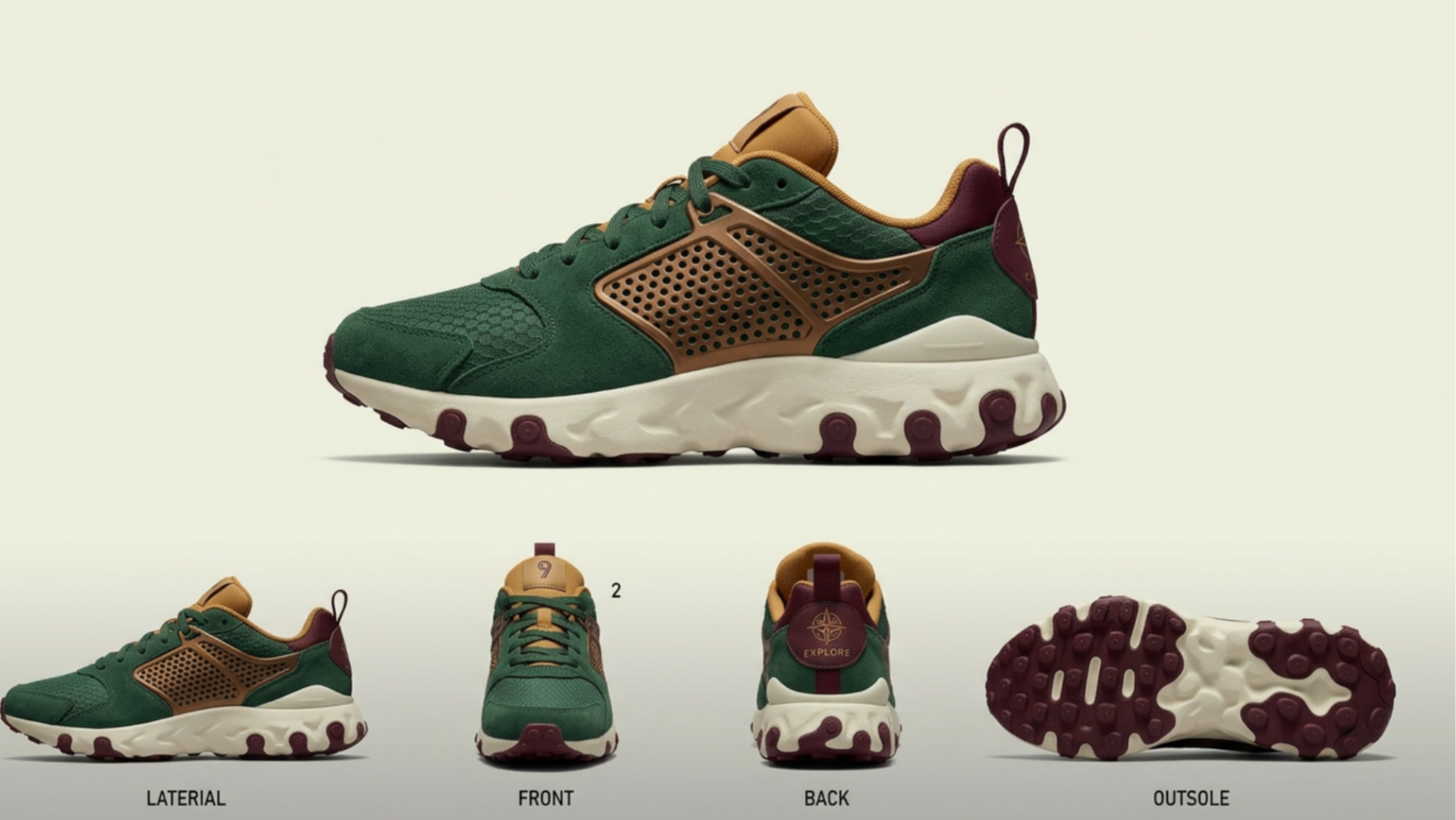
The technical boards help push the concept beyond a single render. By calling out materials, construction, traction, heel support, strap closure, knit zones, and outsole geometry, the project begins to read like a product development package. This is where AI becomes useful for communicating design intent quickly to collaborators, clients, or internal teams.
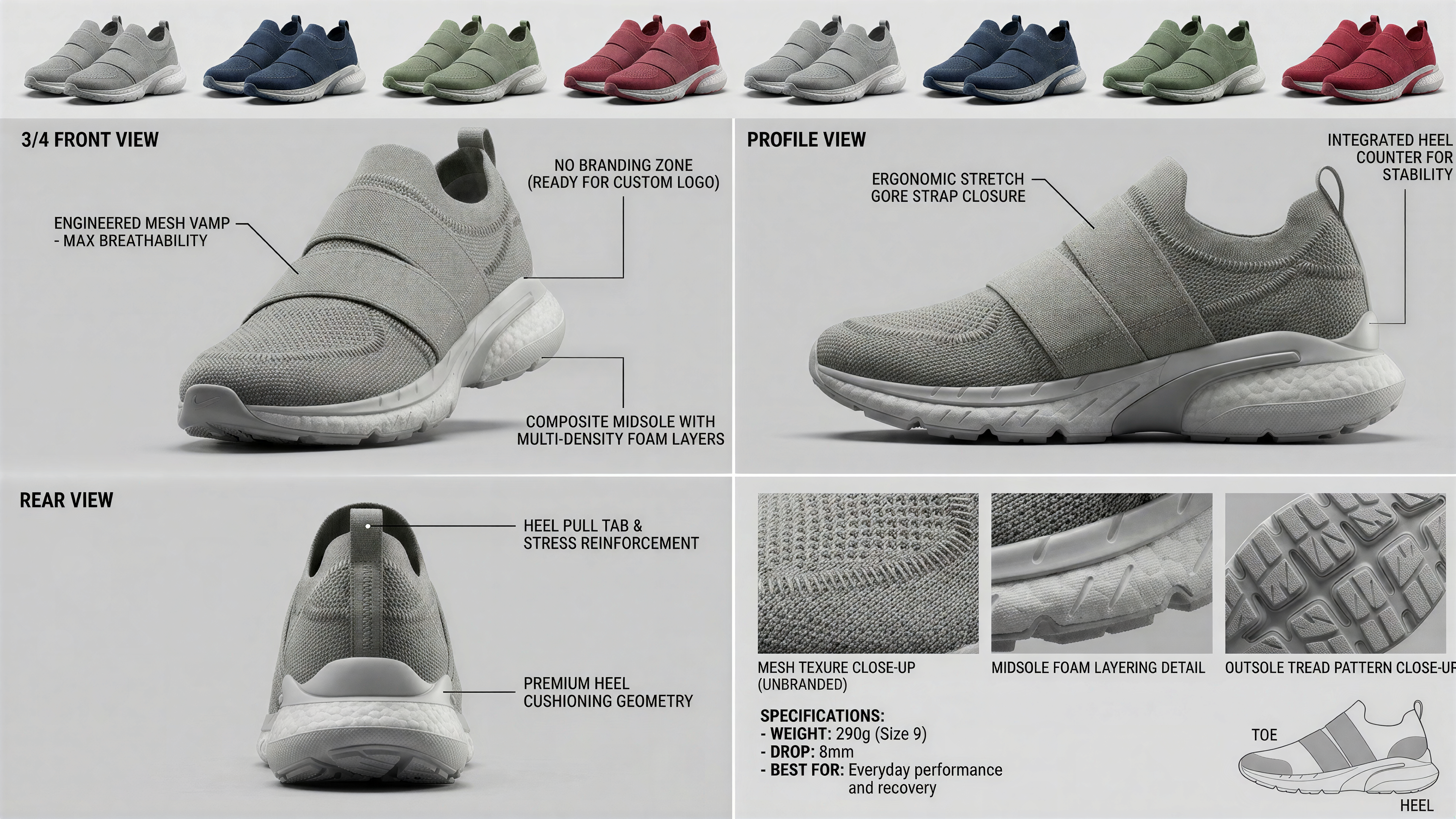
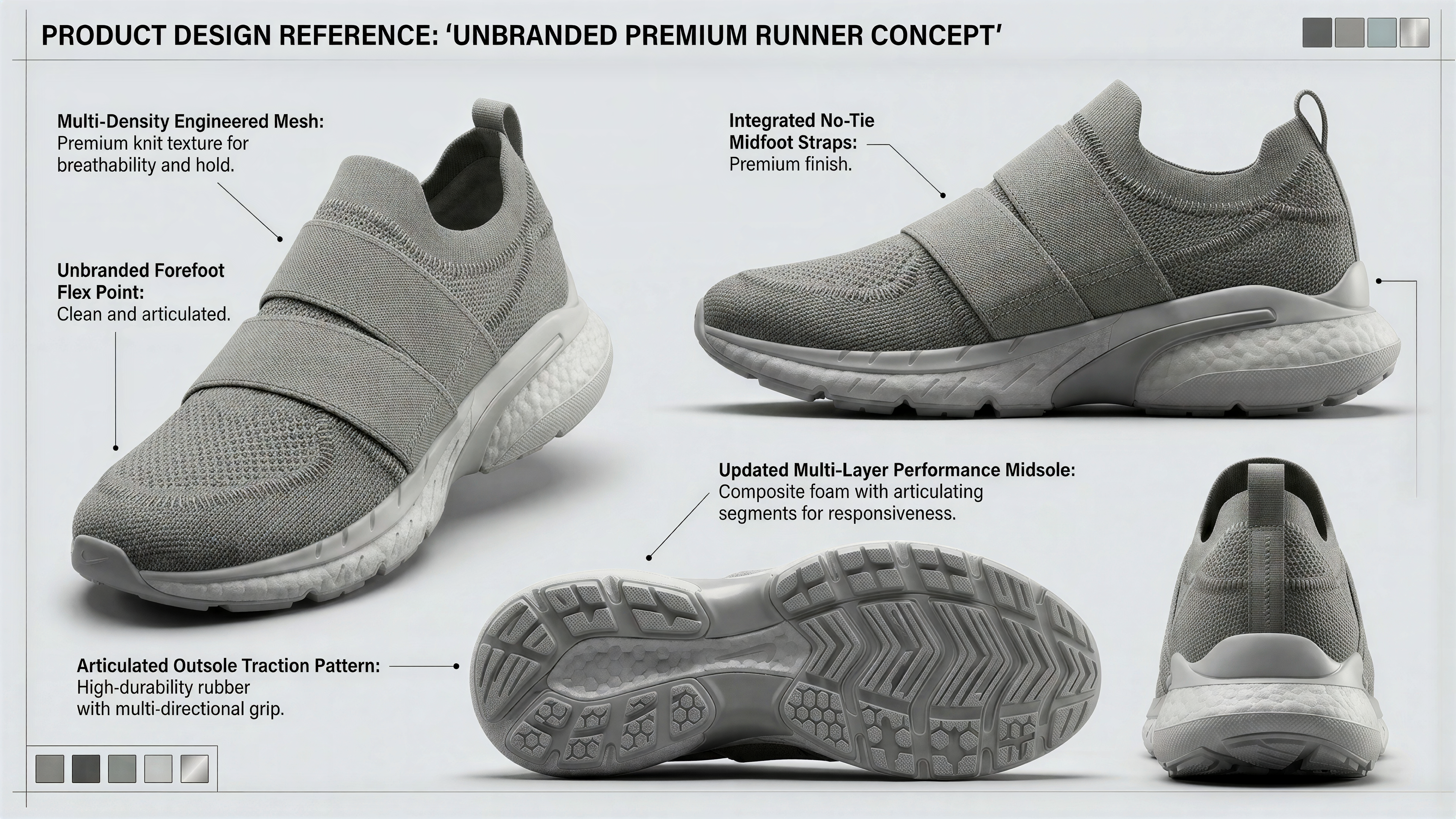
Unbranded Color / Early Material Exploration
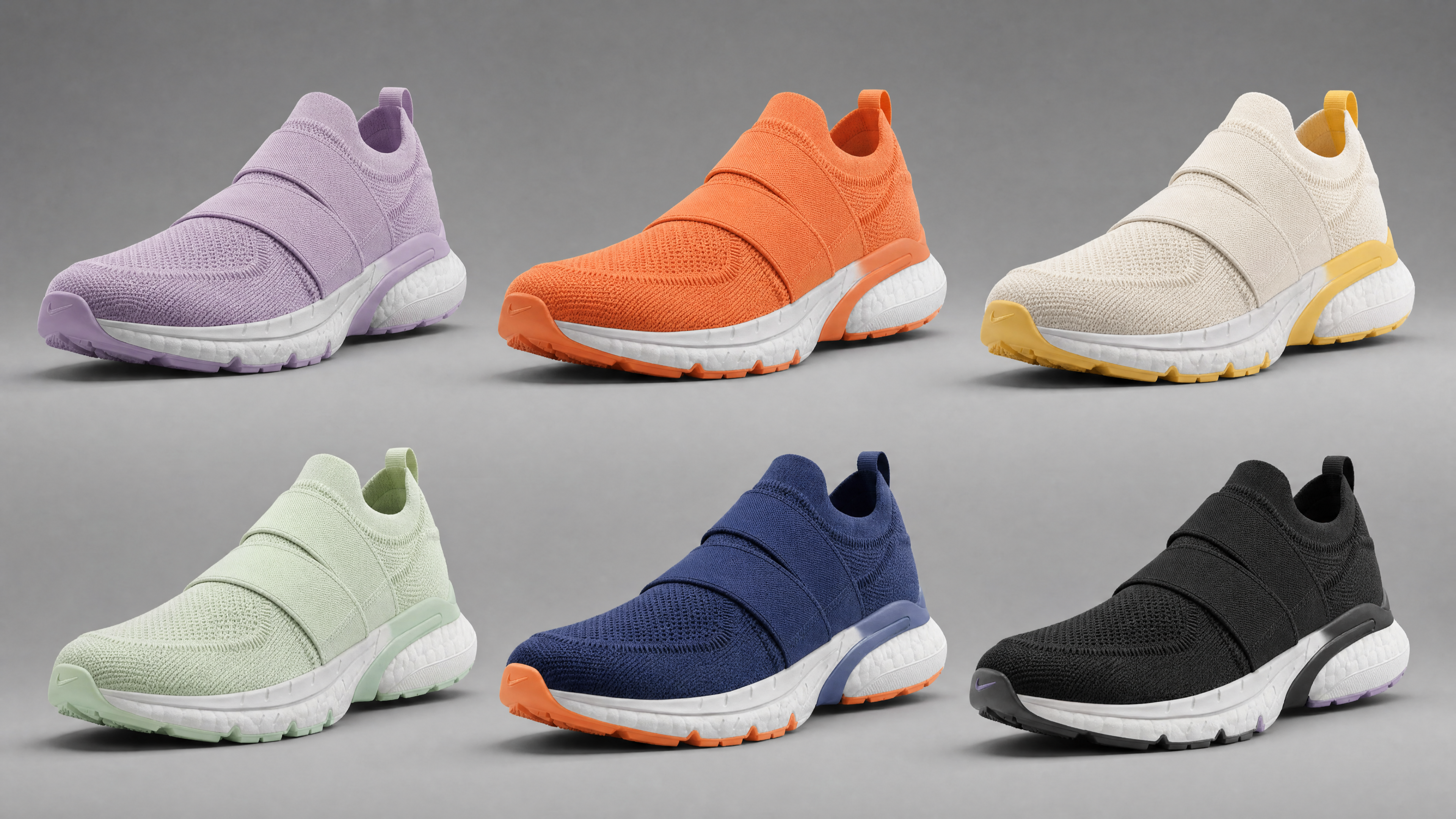
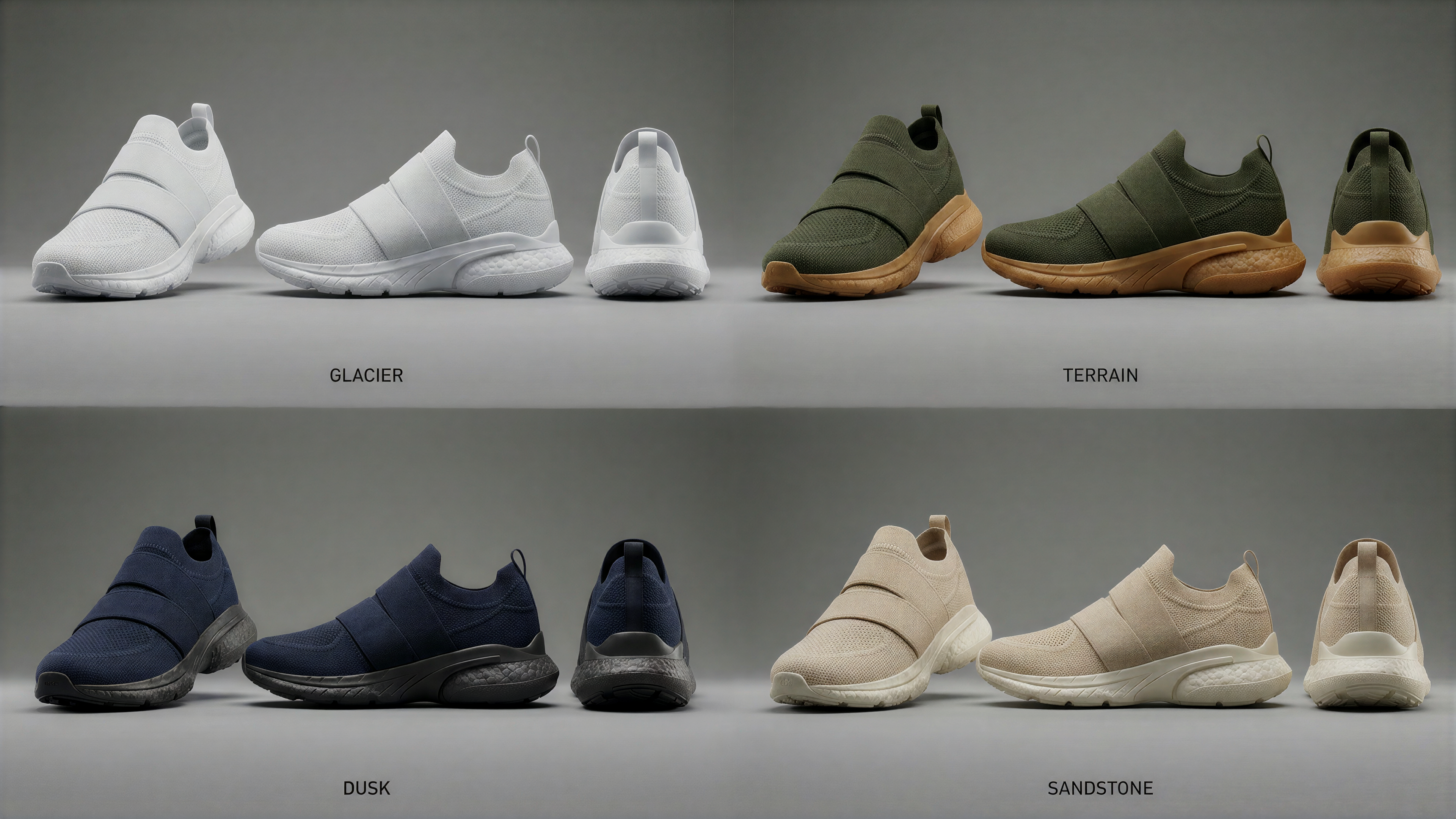
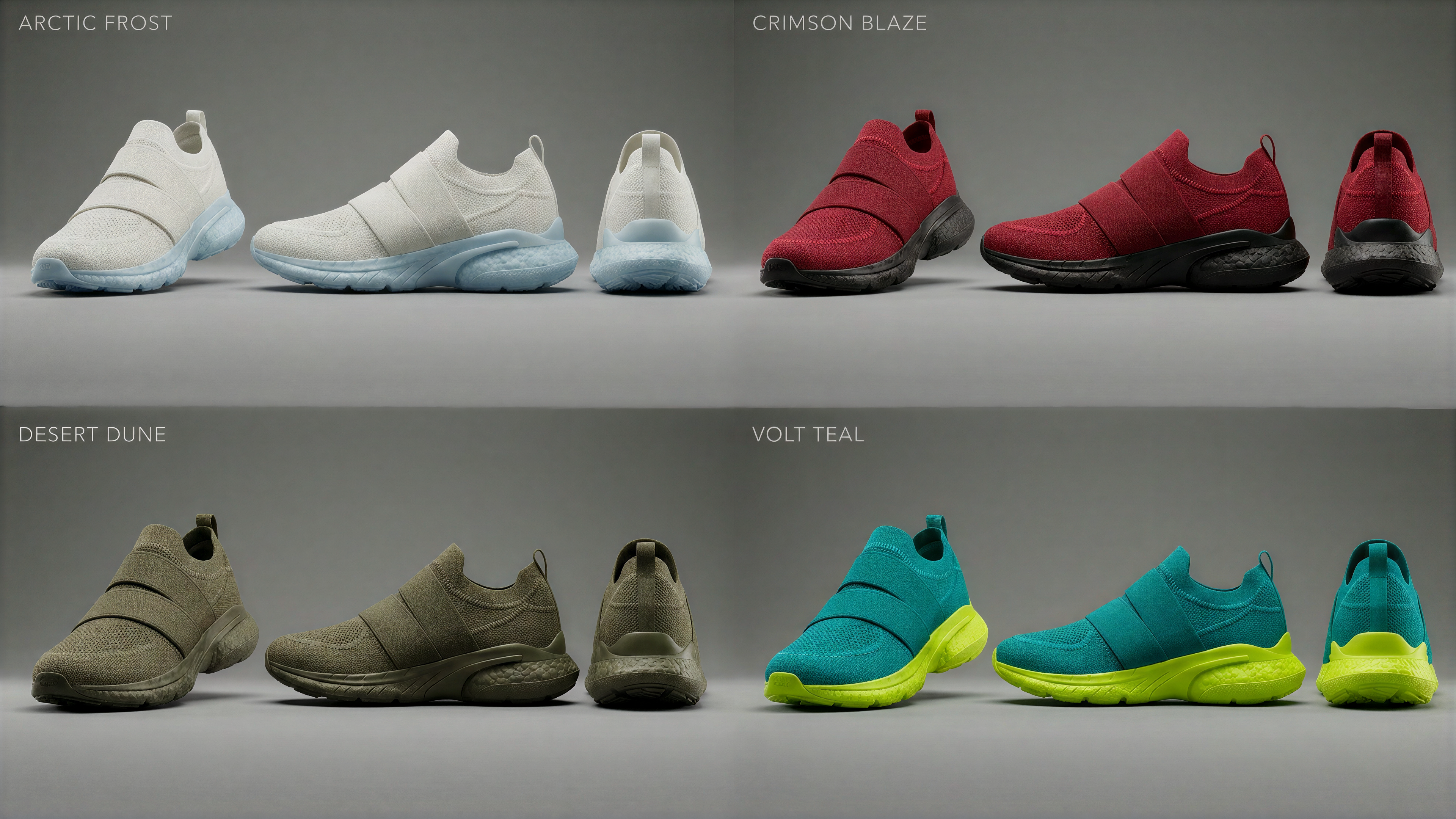
Color becomes part of the design system rather than just a surface treatment. Variations like Arctic Frost, Crimson Blaze, Desert Dune, Volt Teal, Glacier, Terrain, Dusk, and Sandstone show how the same silhouette can move between performance, lifestyle, recovery, and private-label product directions.
Color becomes part of the design system rather than just a surface treatment. Variations like Arctic Frost, Crimson Blaze, Desert Dune, Volt Teal, Glacier, Terrain, Dusk, and Sandstone show how the same silhouette can move between performance, lifestyle, recovery, and private-label product directions.
These colorways help evaluate market positioning: energetic, minimal, outdoor-inspired, premium, or everyday neutral.
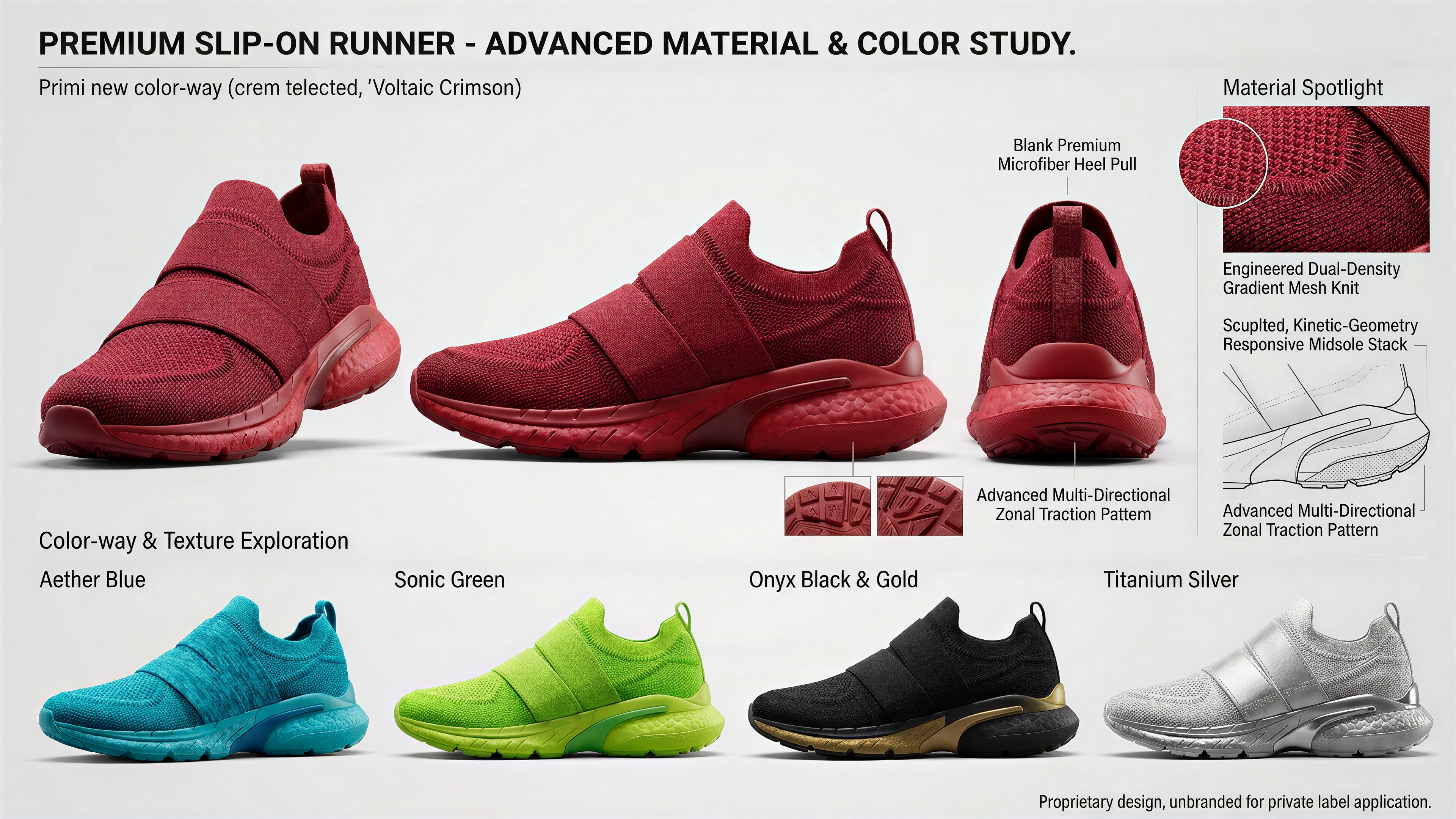
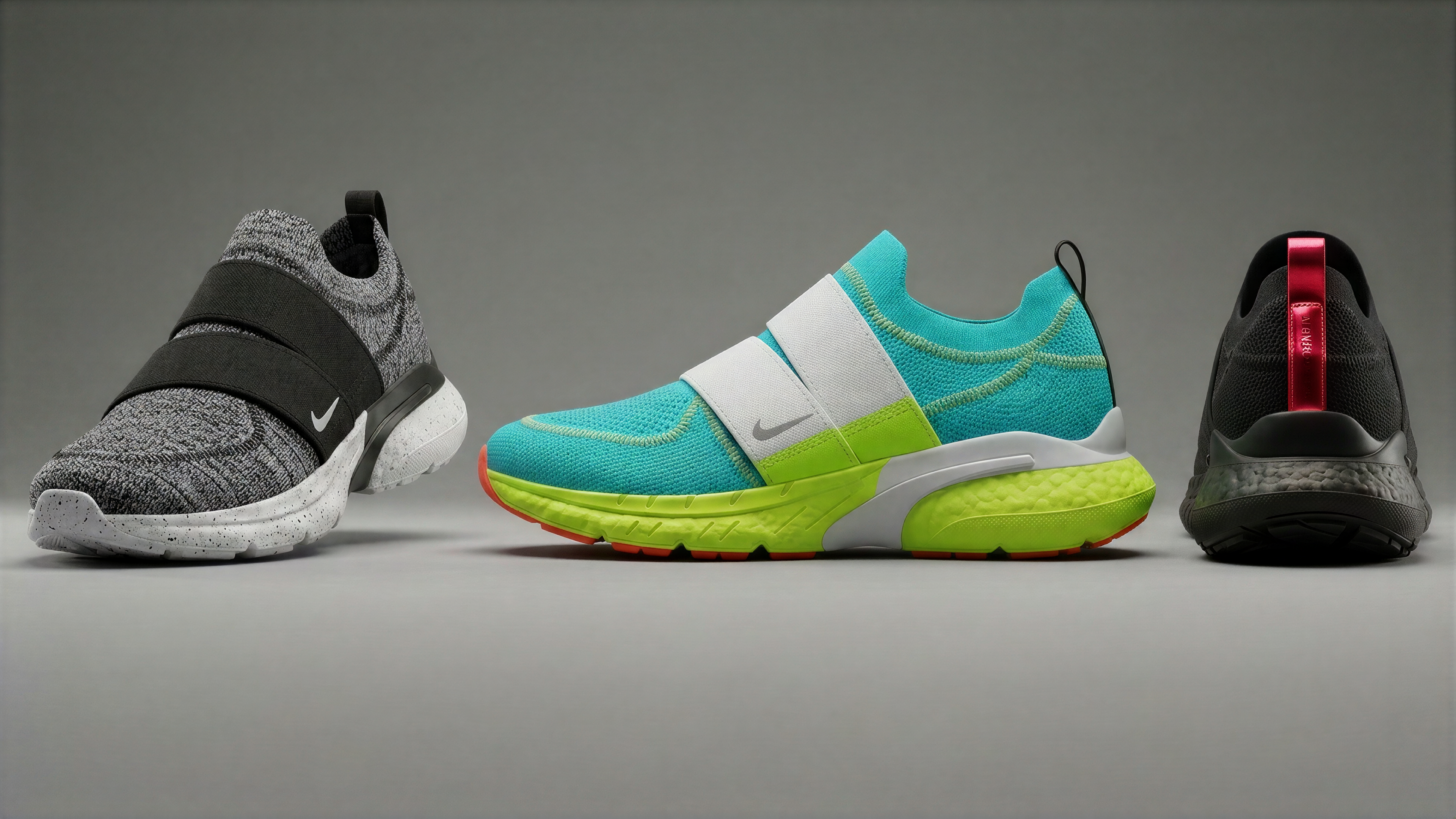
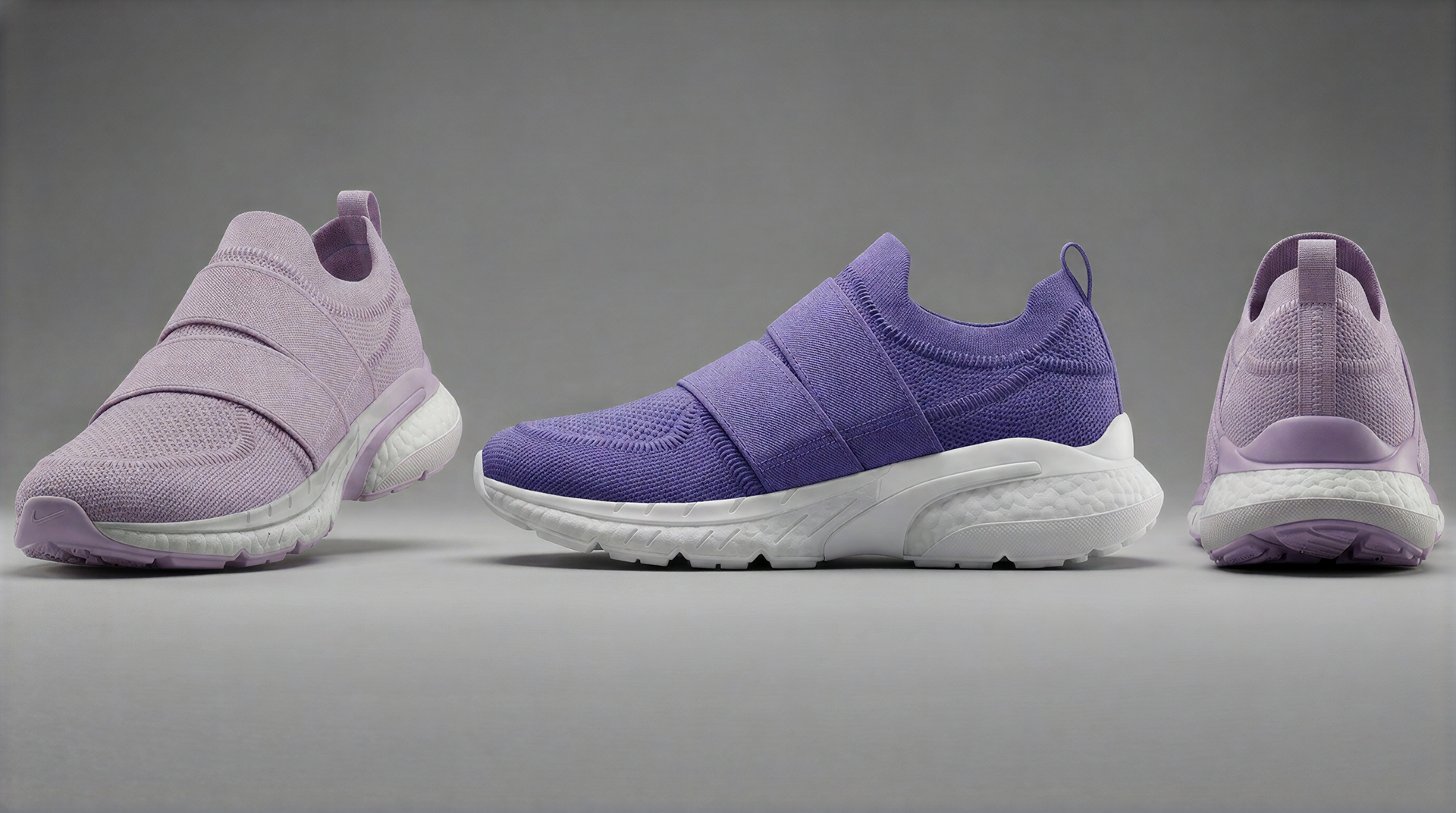
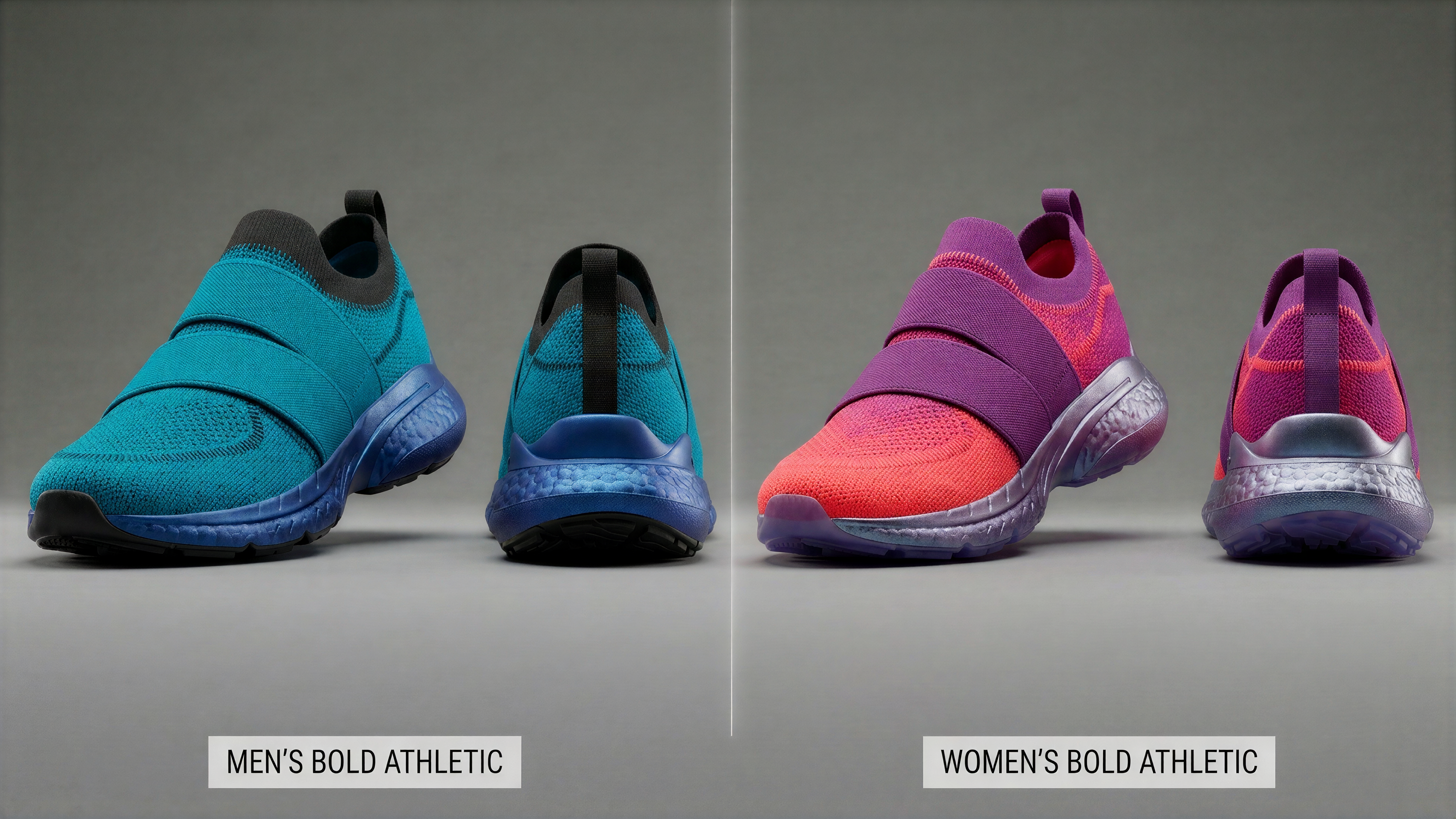
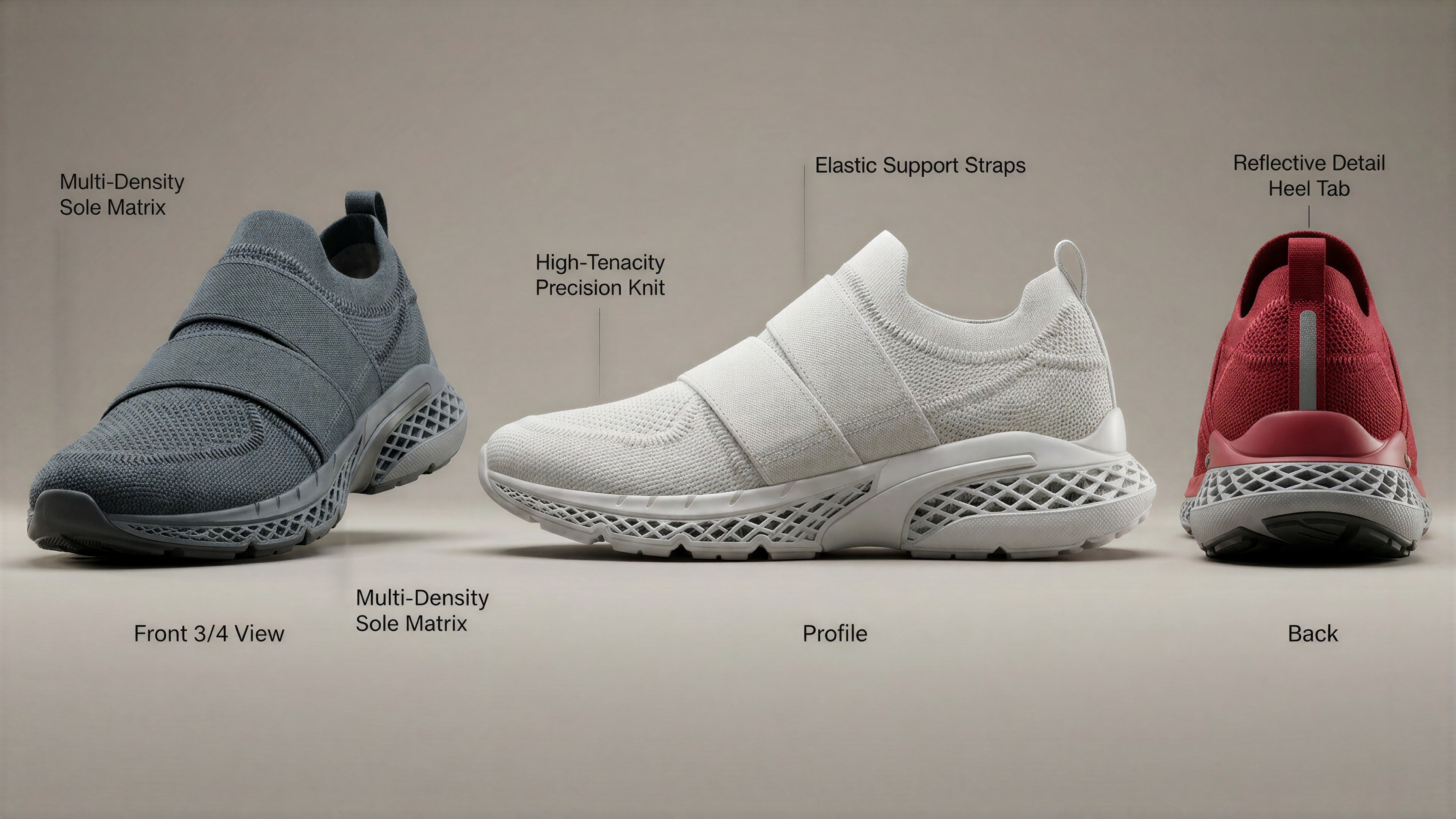
The concept is a premium slip-on runner built around comfort, breathability, and everyday performance. Key design ideas include a precision-knit upper, elastic midfoot support straps, a pull-on collar, a reinforced heel tab, and a multi-density sole system. The form language is soft and wearable, but the tooling gives it a more technical, athletic read.
Final Design Direction
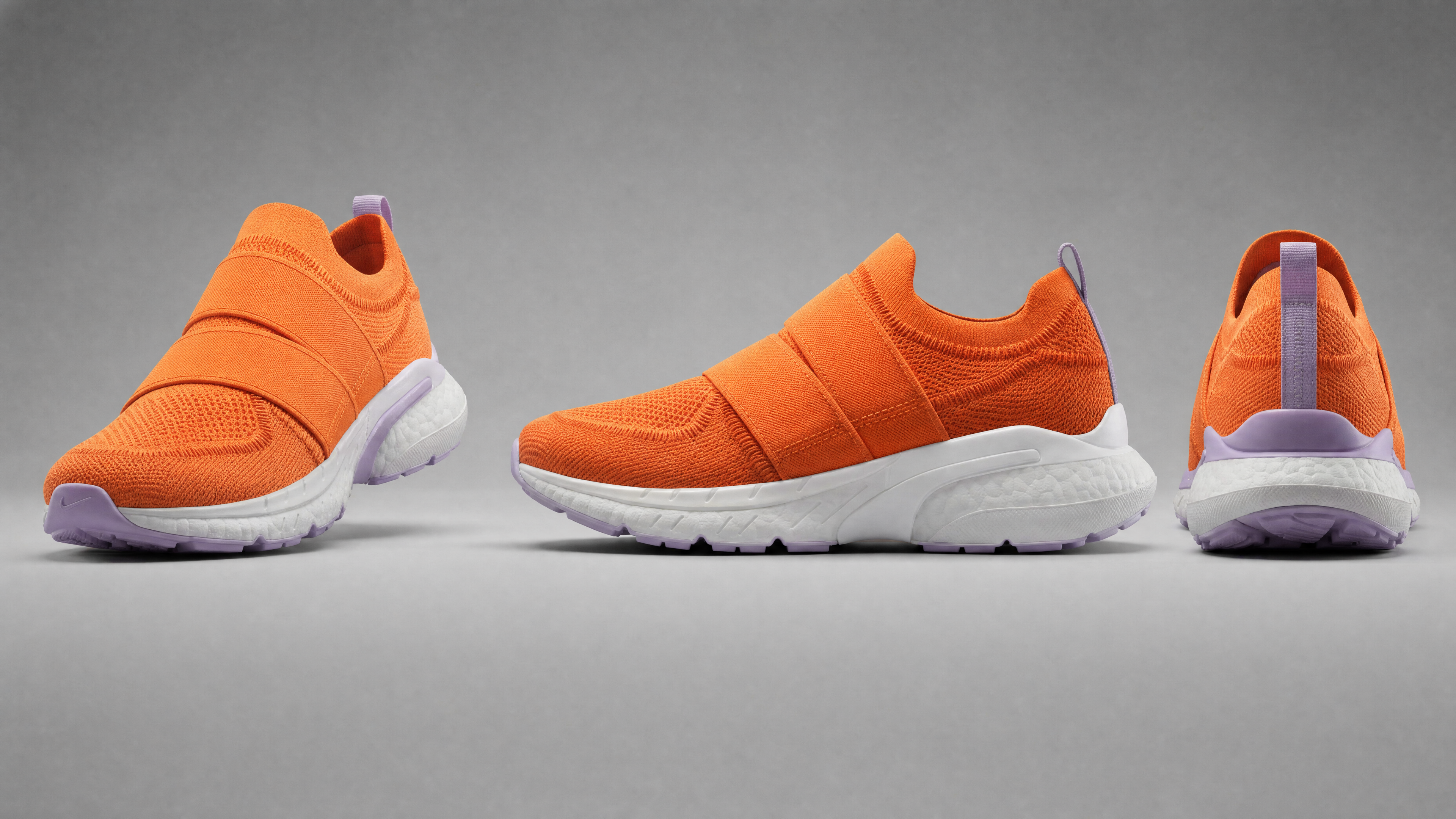
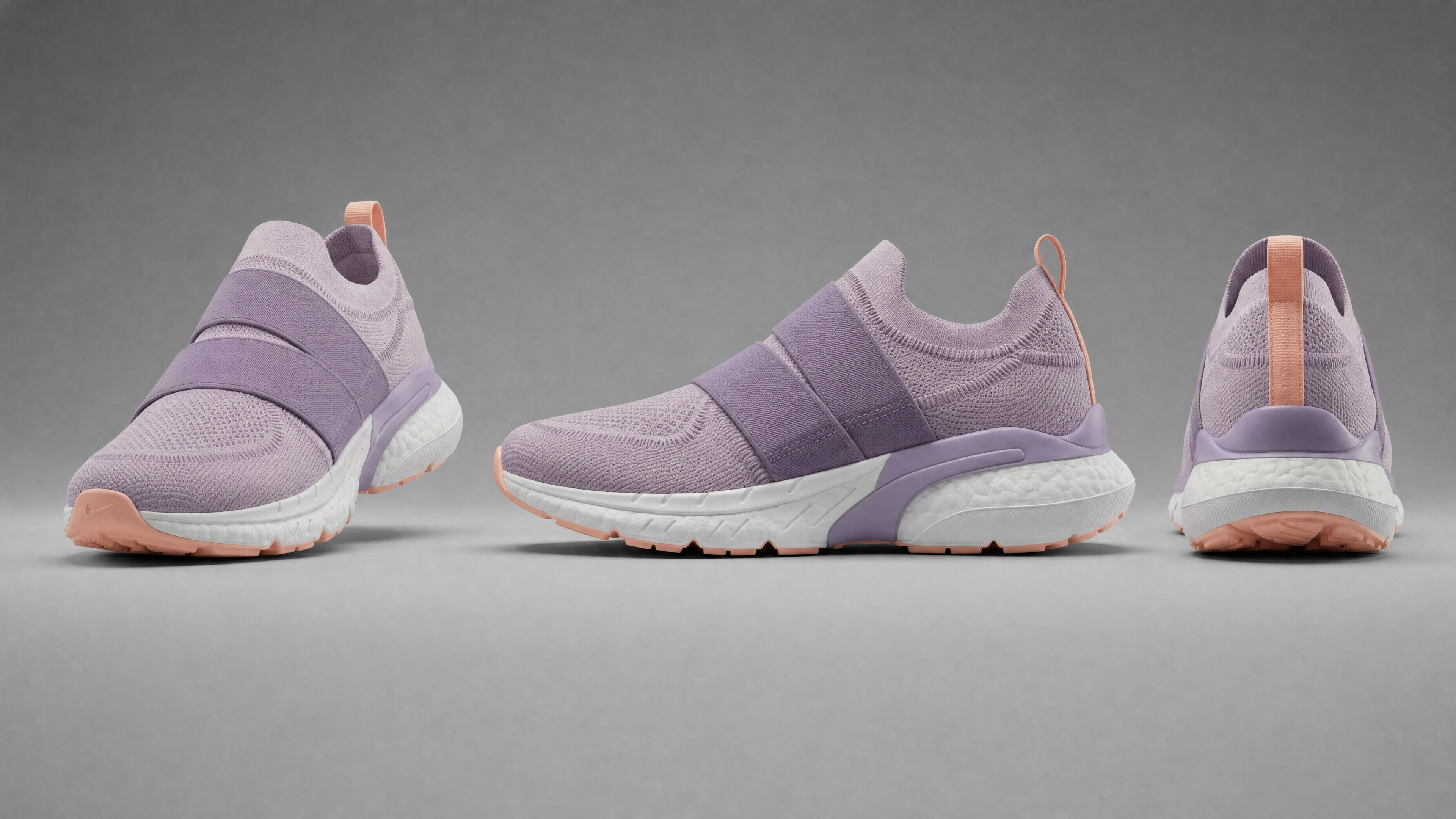
The final concept brings the early sketch into a resolved footwear form: a premium slip-on runner built around comfort, utility, and clean athletic styling. The design keeps the original idea of a sock-like upper and elastic support straps, while refining the silhouette into something that feels more production-ready and commercially believable.
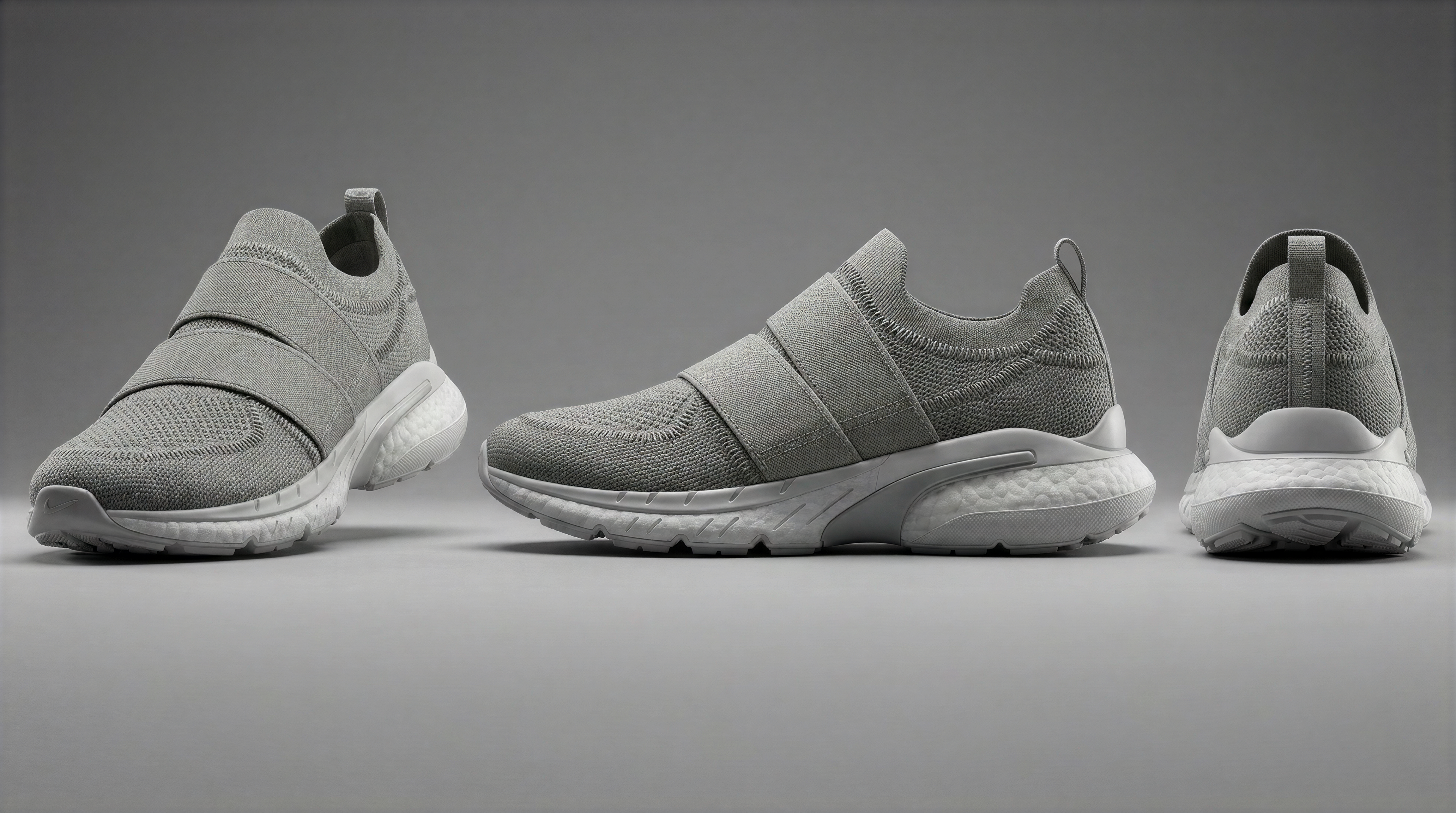
The upper uses a soft engineered knit language with visible texture zones around the toe, collar, and heel. The elastic midfoot straps create a no-lace closure system that feels functional but minimal, giving the shoe a strong identity without overcomplicating the form. The heel pull and sculpted rear structure add usability and stability, while the layered midsole gives the design a more technical performance read.
.
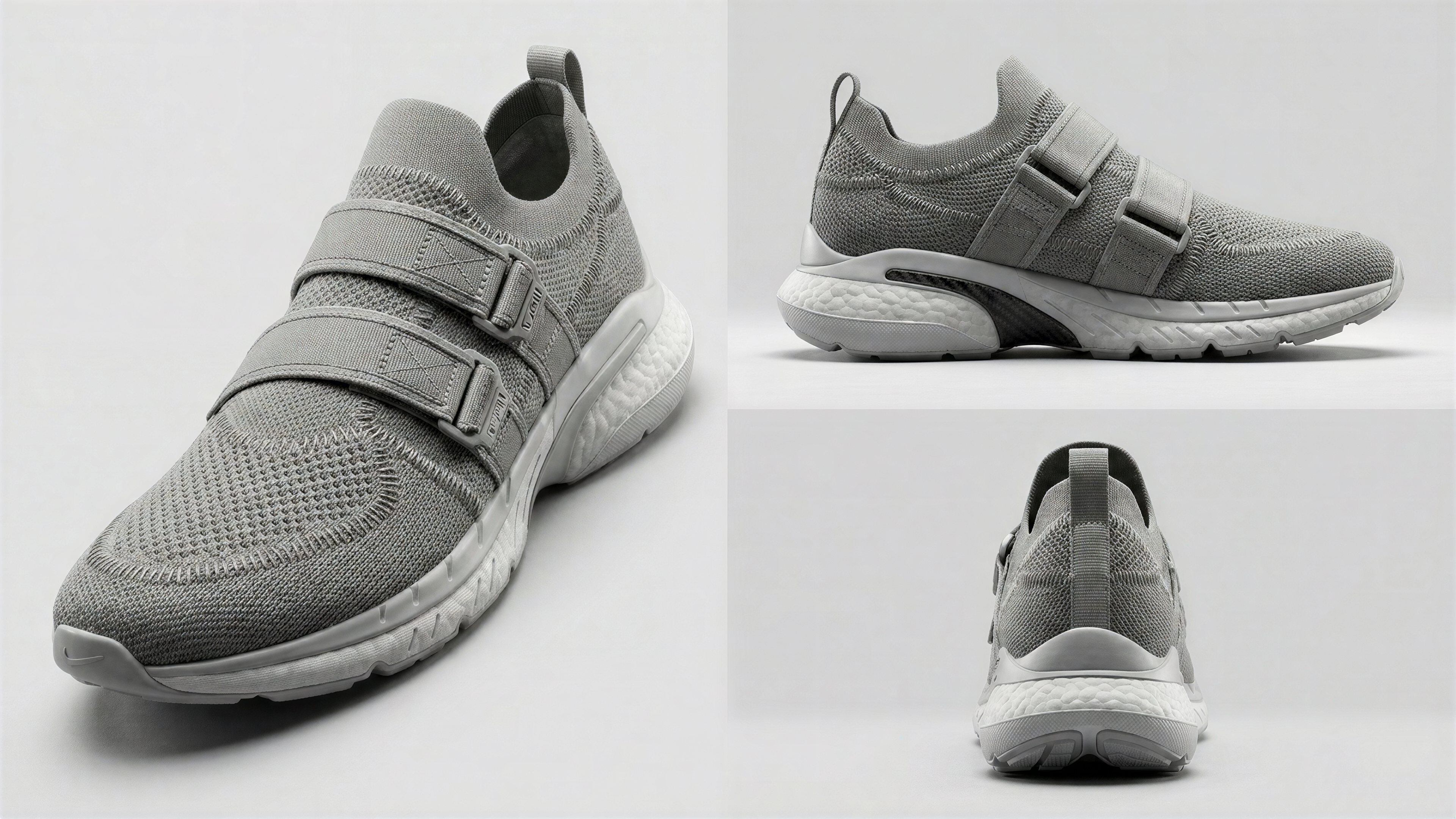
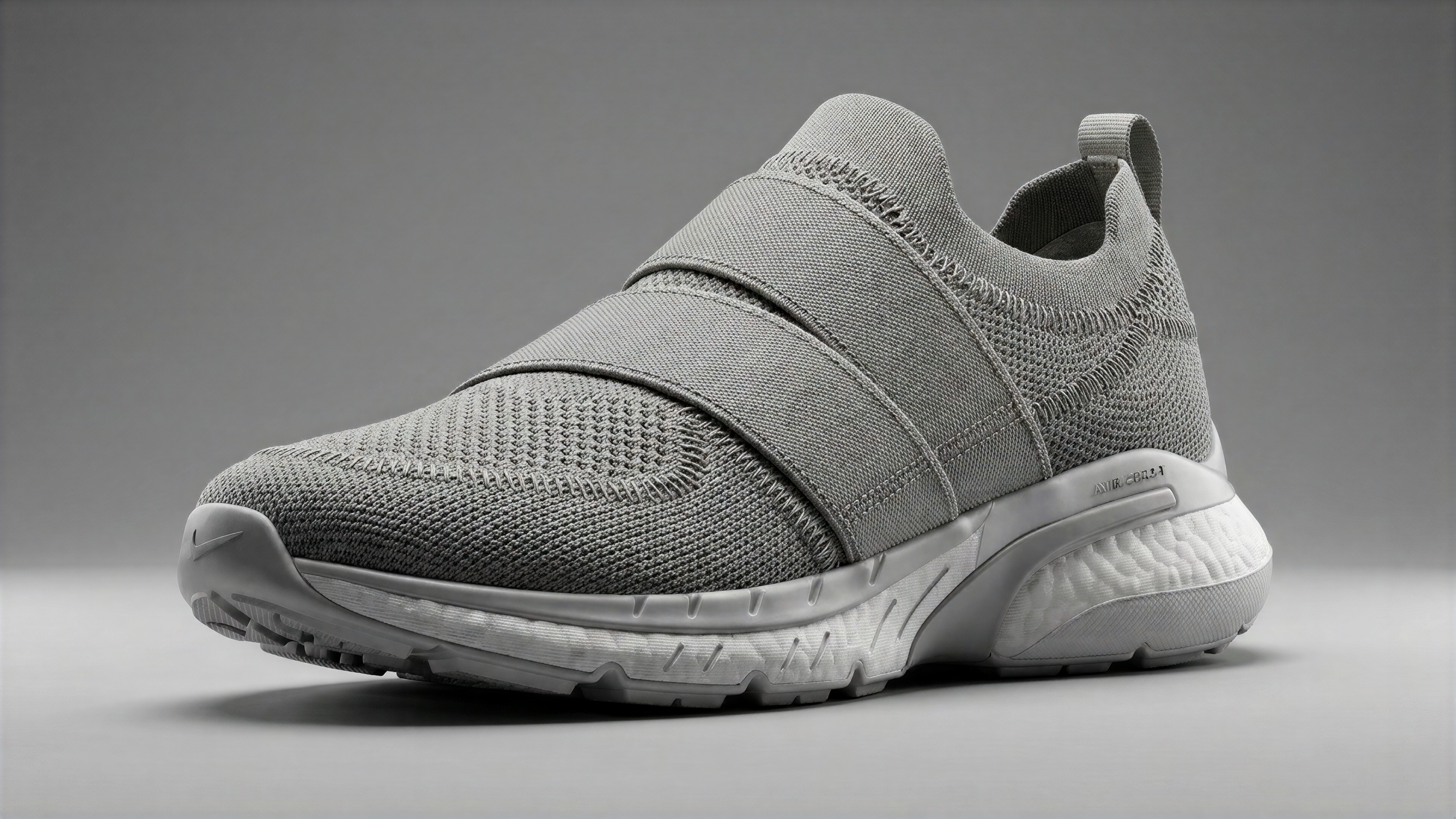
I created a Vizcom layer time-lapse that shows how the AI-assisted render clarifies proportion, material, construction, and product attitude. What began as a loose sketch is now a visualized concept that can be evaluated like a real product: silhouette, comfort, branding potential, color direction, and market fit. This is where the process moves from idea generation to design decision-making.
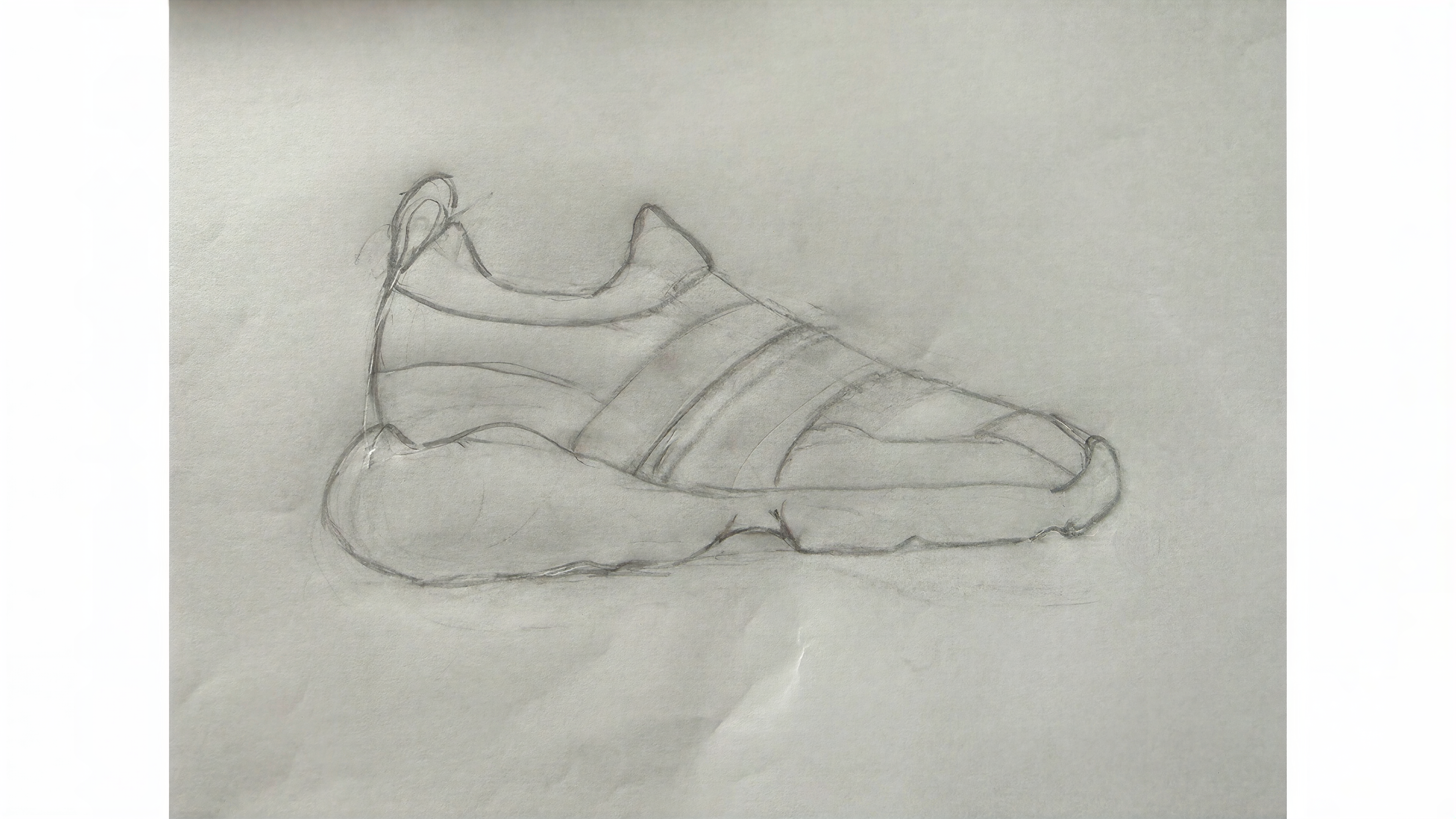
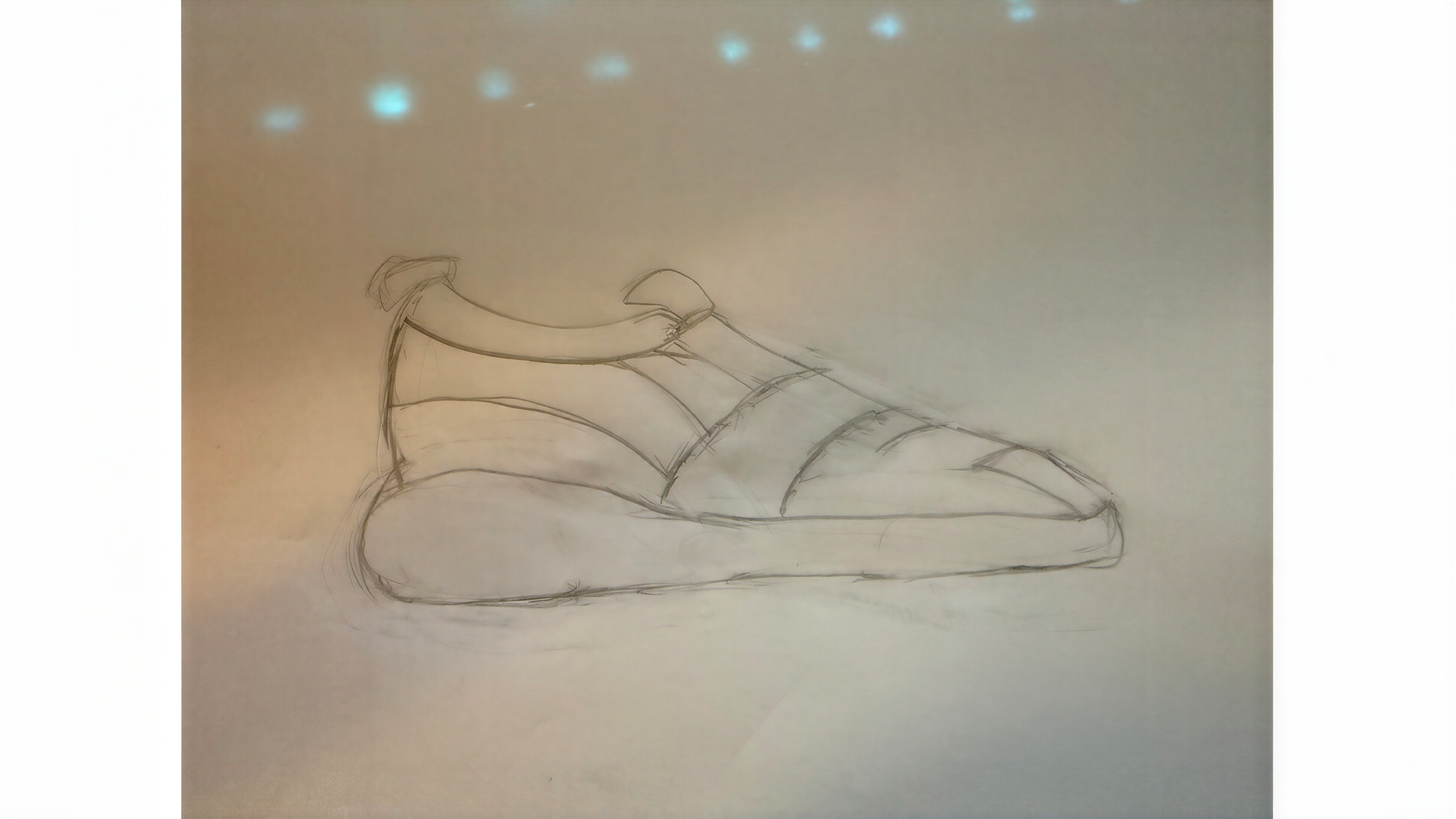
PROCESS: Original Sketch
The original sketch establishes the foundation: silhouette, stance, collar shape, strap placement, toe volume, heel pull, and midsole attitude. Those early decisions give the AI something to respond to. Vizcom becomes useful because it can preserve the intent of the sketch while helping explore surface detail, knit texture, cushioning structure, and multiple color/material directions.
This is where traditional design experience matters. AI can generate variation, but the designer still has to decide what feels balanced, functional, ownable, and worth developing.
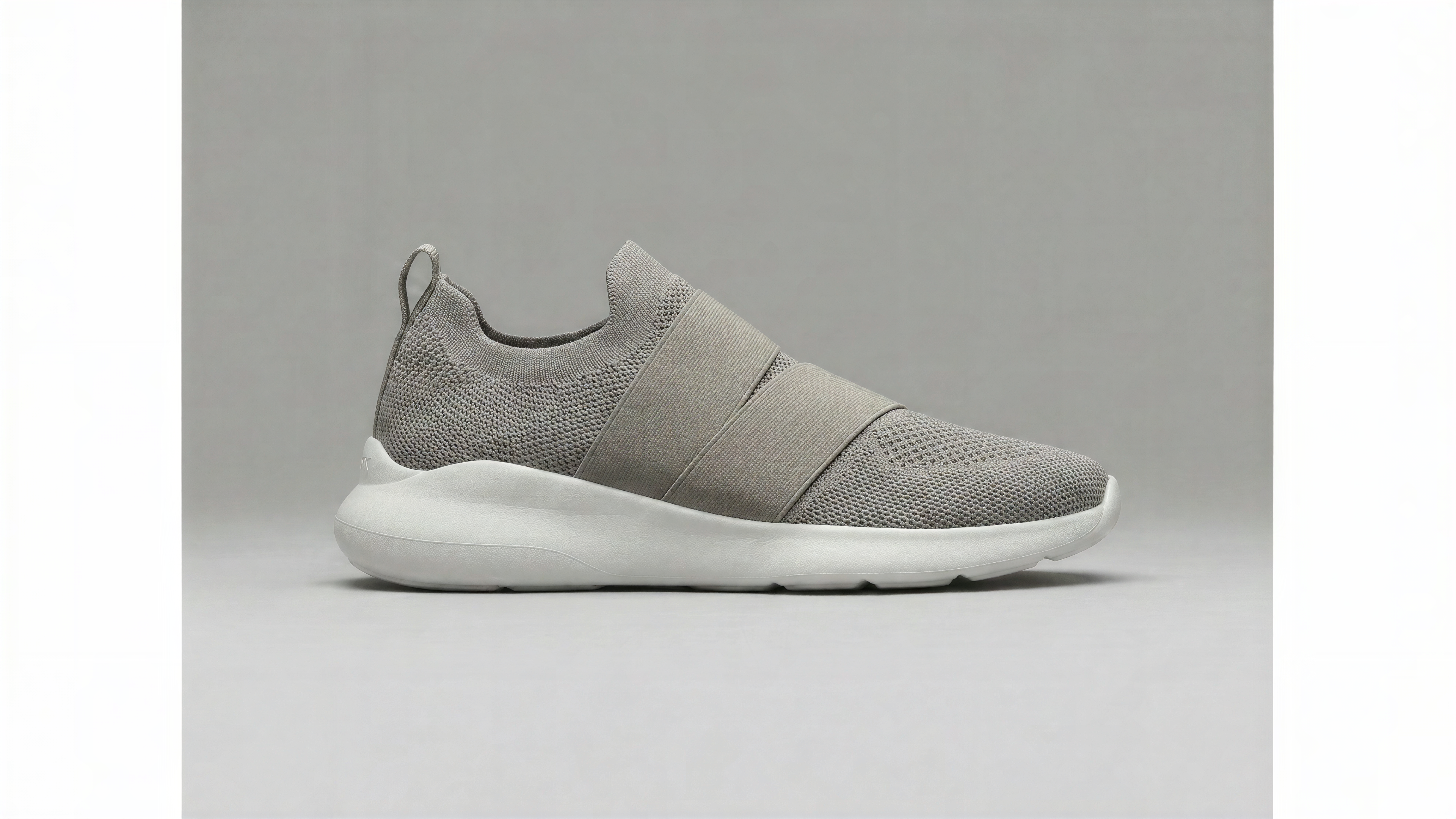
Design Foundation :: This is Orignal generation based of the napkin sketch all other design can from this base generation.
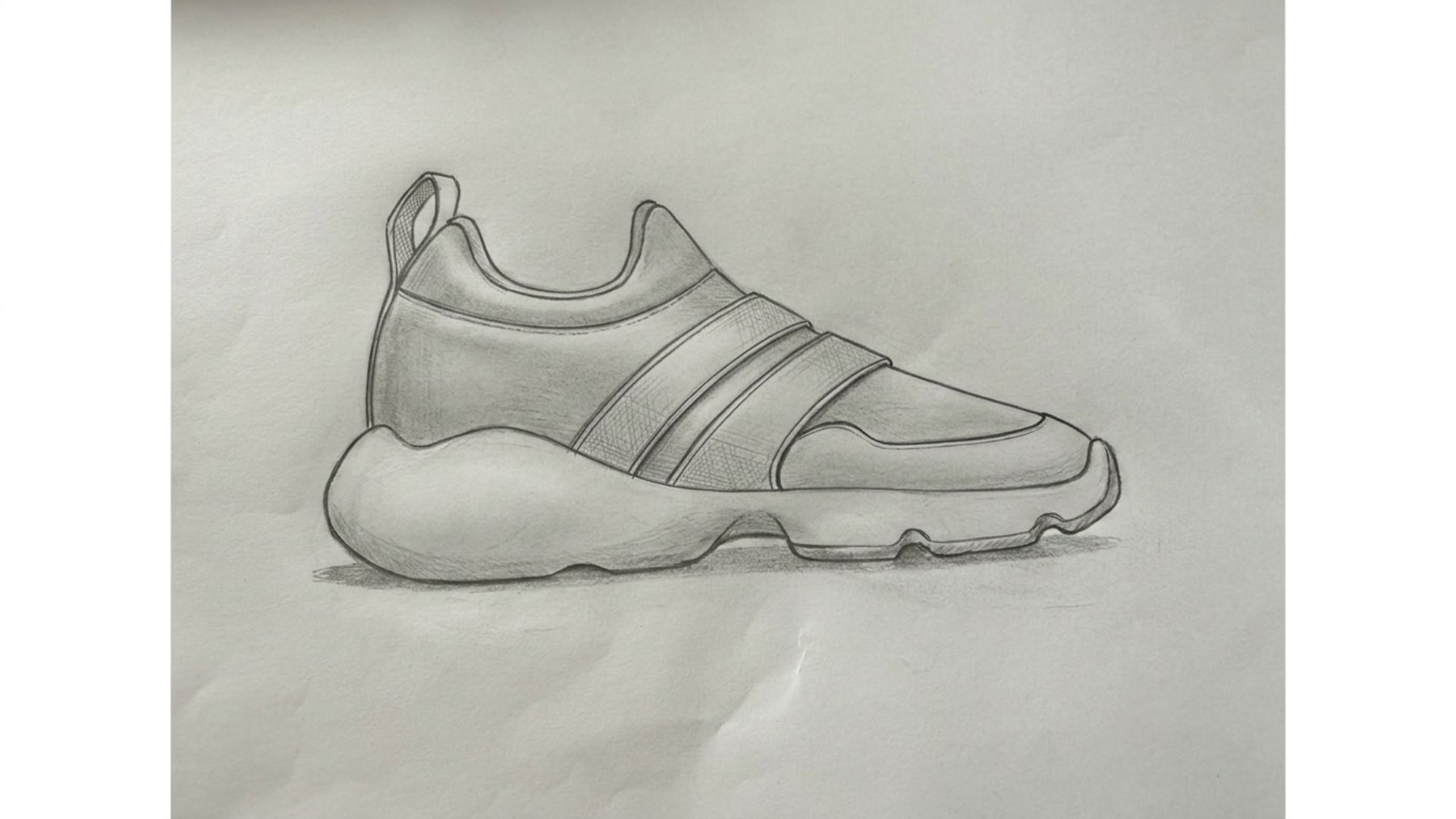
Design Foundation: The final sketch Refined
original
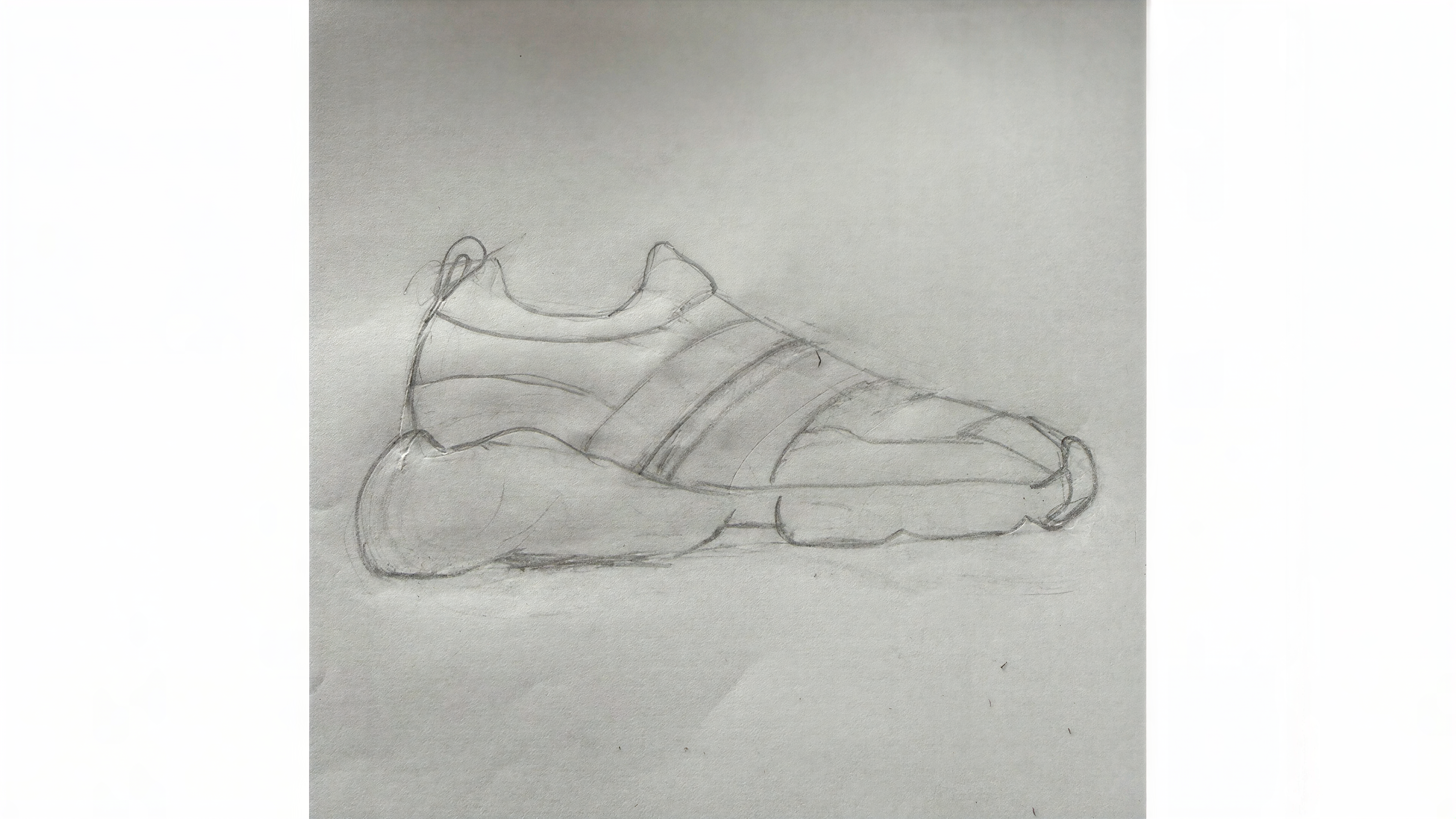
revision 1
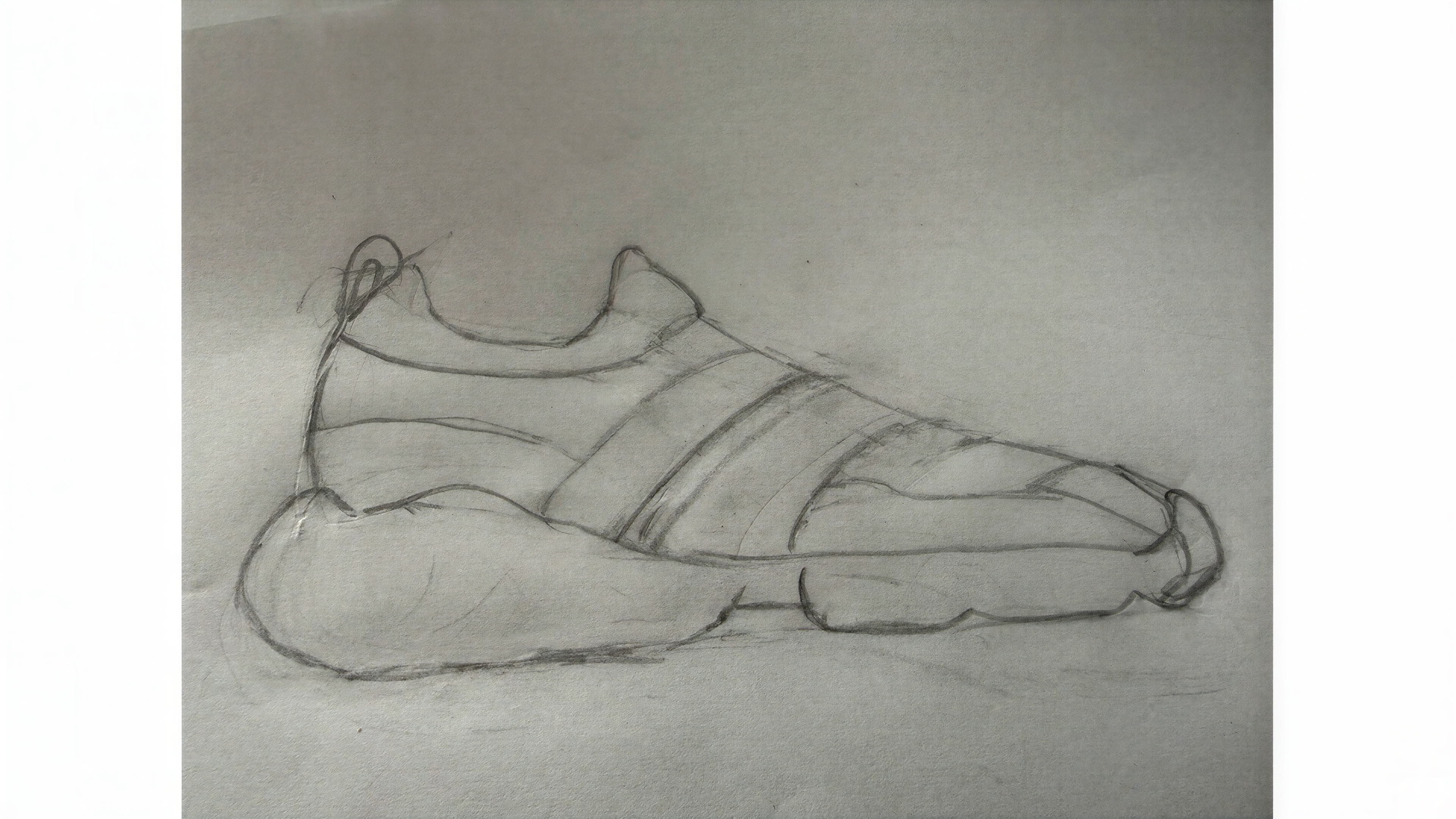
revision 2